

Coconut Layer Cake

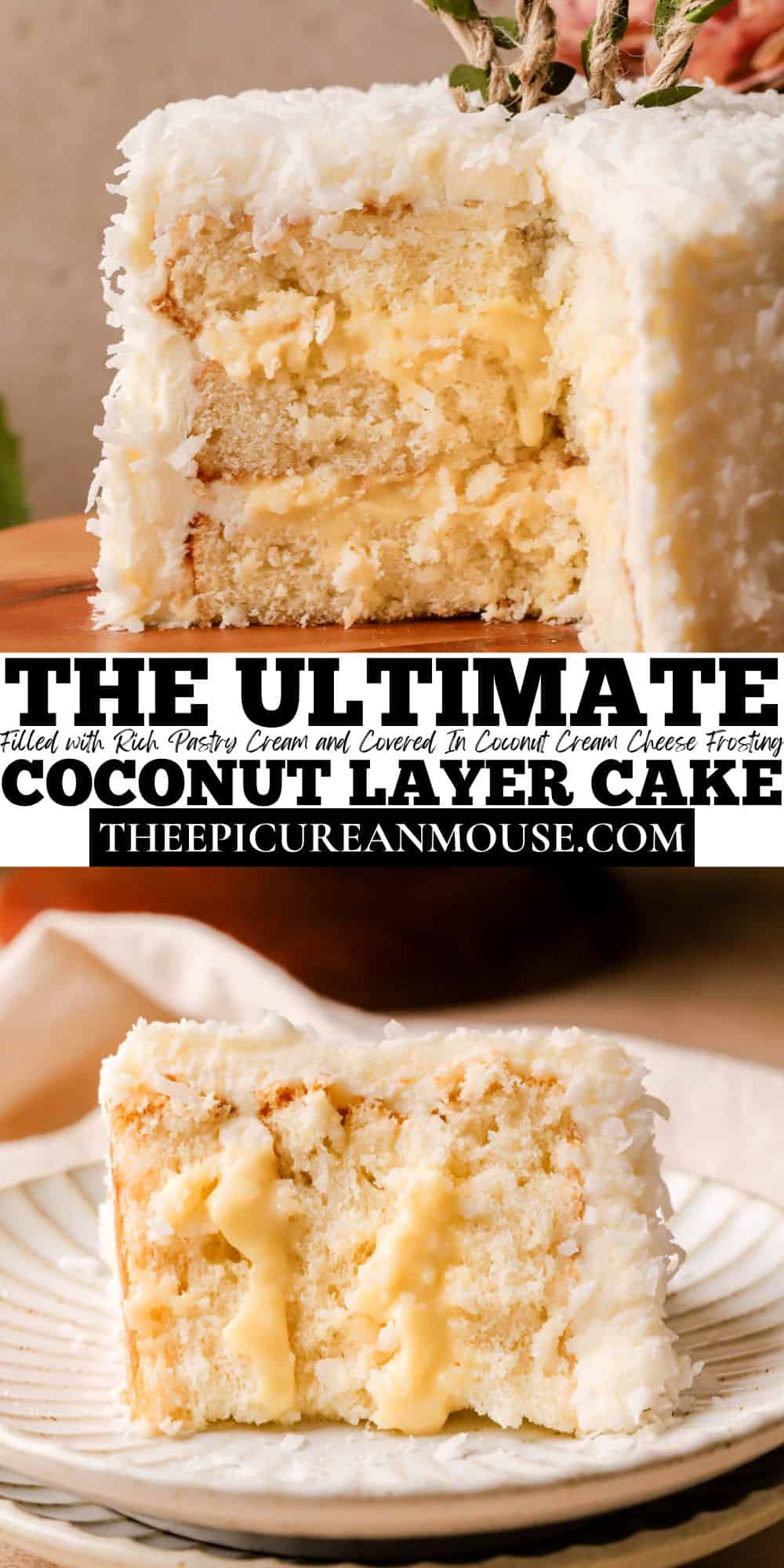
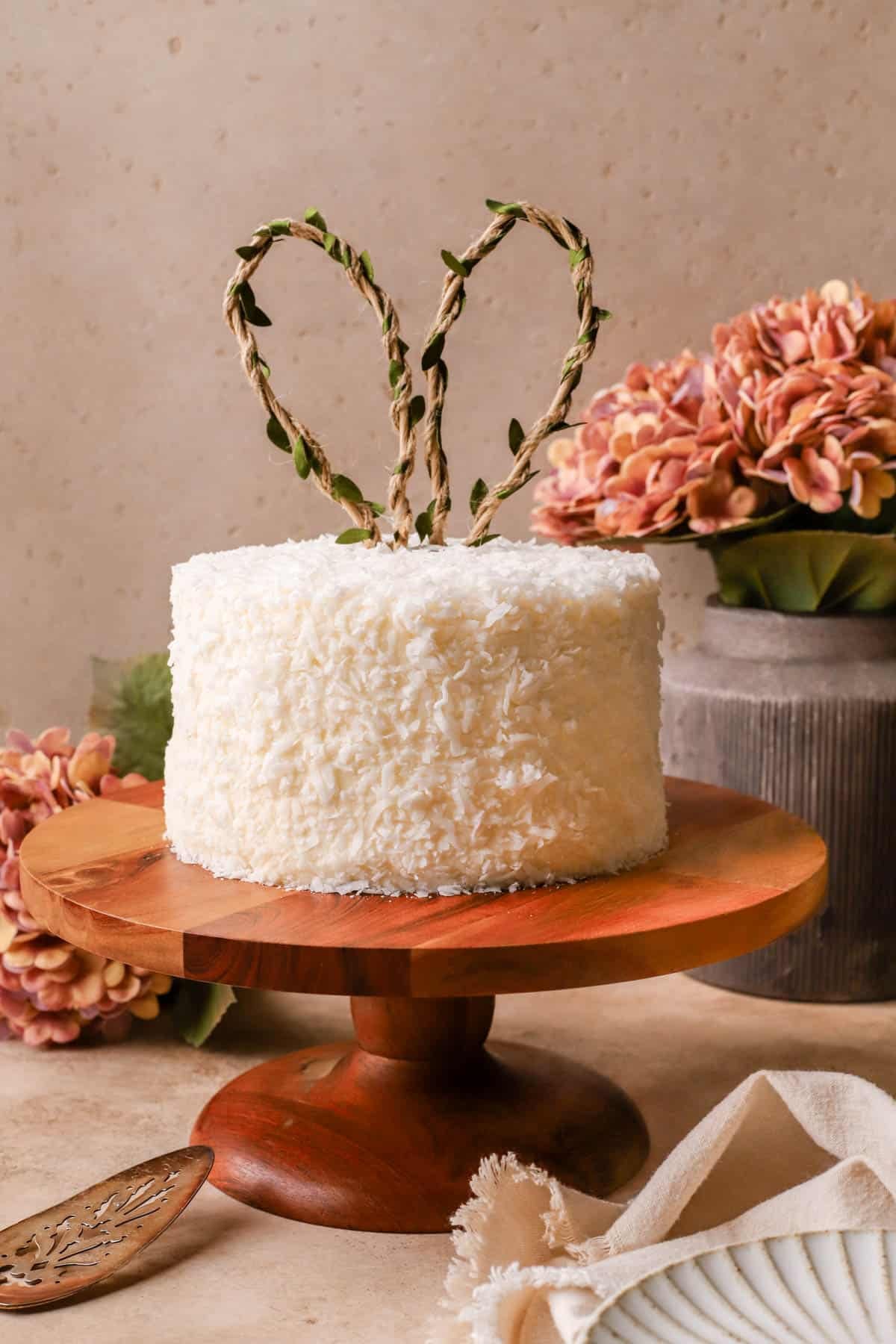
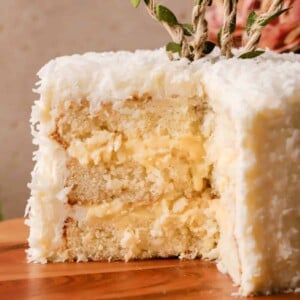
This light and airy Coconut Layer Cake is the perfect way to celebrate Easter. Made with a delicious butter cake that’s infused with coconut milk, then filled with silky pastry cream and covered in rich cream cheese frosting. It’s soft, creamy, and full of sweet coconut flavor. A coating of shredded coconut gives it that classic, snowy look, almost like a little Easter bunny itself!
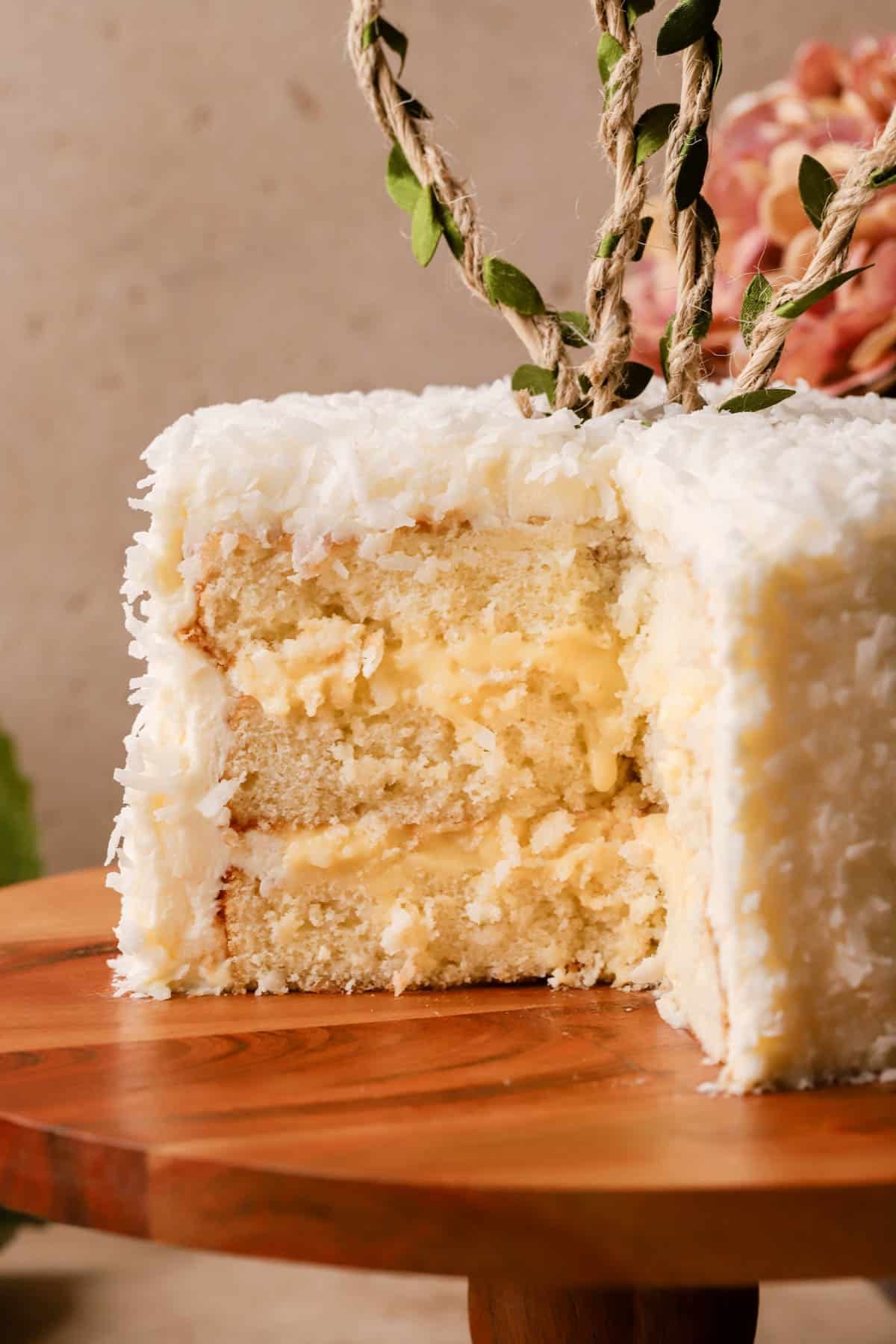
Whether you’re gathering with family, hosting brunch, or just baking something special for the holidays, this Coconut Layer Cake is a showstopper. With its irresistible texture, creamy layers, and festive touch, it’s the perfect centerpiece for your Easter celebration.
If you’re looking for more Easter baking inspiration, I’ve got plenty of delicious ideas to make your holiday even sweeter. Try my Mini Carrot Cake, Chocolate Fudge Cupcakes, or Berry Crumble Cheesecake.
Why You’ll Love This Coconut Cream Cake
- Soft and fluffy cake layers- The cake itself is incredibly tender, thanks to a mix of butter, oil, and coconut milk. This recipe also uses cake flour, rather than all-purpose flour, which gives it a wonderful crumb.
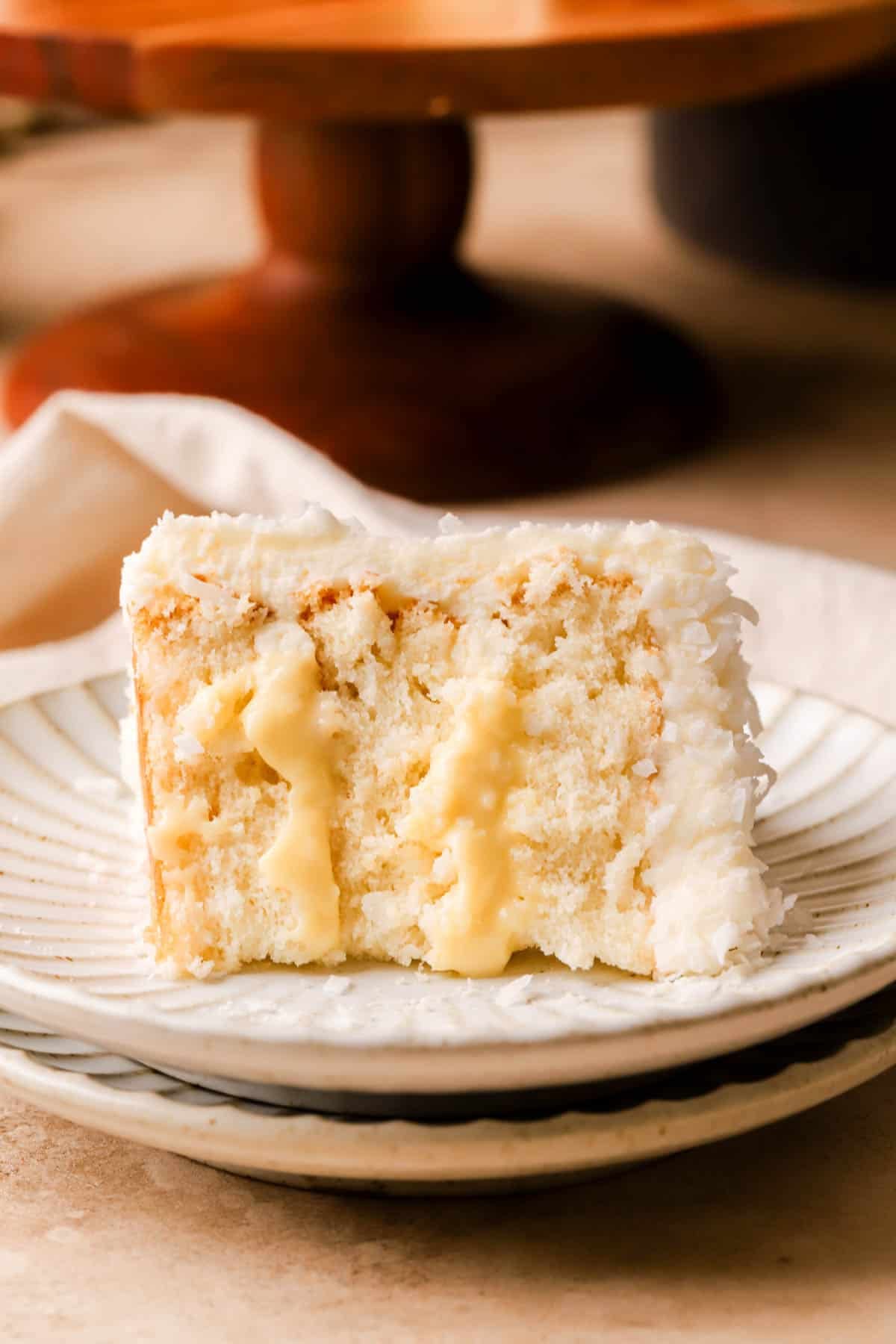
- Silky pastry cream- Instead of a typical frosting-only cake, this one is filled with smooth, vanilla custard.
- Dreamy coconut frosting- This frosting is ultra-creamy, smooth and loaded with shredded coconut. A combination of butter, cream cheese, and powdered sugar makes it rich yet perfectly spreadable, with a slight tang that balances the sweetness.
- Perfect for any occasion- The snowy-white shredded coconut gives it an elegant, bakery-worthy finish, making it just as great for Easter, Mother’s Day or even Sunday brunch.
Ingredient Notes and Substitutions
Below are ingredient notes. For the complete list and quantities, please refer to the recipe card located at the bottom of the page.
- Cake flour- This gives the cake a light, tender crumb.
- Baking powder- Helps the cake rise and stay fluffy. Make sure it’s fresh, and not expired for the best results.
- Sugar- White granulated sugar sweetens the cake while keeping the texture light.
- Unsalted butter- Make sure your butter is at room temperature so it blends smoothly into the batter.
- Vegetable or canola oil- Keeps the cake moist. A neutral oil works best, but melted coconut oil can be used for extra coconut flavor.
- Coconut milk- I use unsweetened canned coconut milk. Be sure to shake or stir it well before measuring.
- Eggs- Use large eggs at room temperature for the best texture and even mixing. If they’re cold, place them in a bowl of warm water for 10 minutes before using.
- All-purpose flour- Used for thickening the pastry cream.
- Whole milk- Used in the pastry cream for a rich, creamy filling.
- Vanilla- Pure vanilla extract has the best flavor.
- Powdered sugar- Make sure to sift the powdered sugar to remove any clumps.
- Cream cheese- Use full-fat cream cheese for the best texture and taste. Soften it at room temperature for 2 hours before mixing.
- Coconut extract- Enhances the coconut flavor in both the cake and frosting.
- Shredded coconut- I use sweetened coconut but if you prefer less sweetness, you can use unsweetened shredded coconut instead.
Homemade Pastry Cream
STEP 1: Separate the eggs. Carefully separate the egg yolks from the whites, placing the yolks in a medium bowl. You won’t need the egg whites for this recipes, but you can save some for the coconut cake.
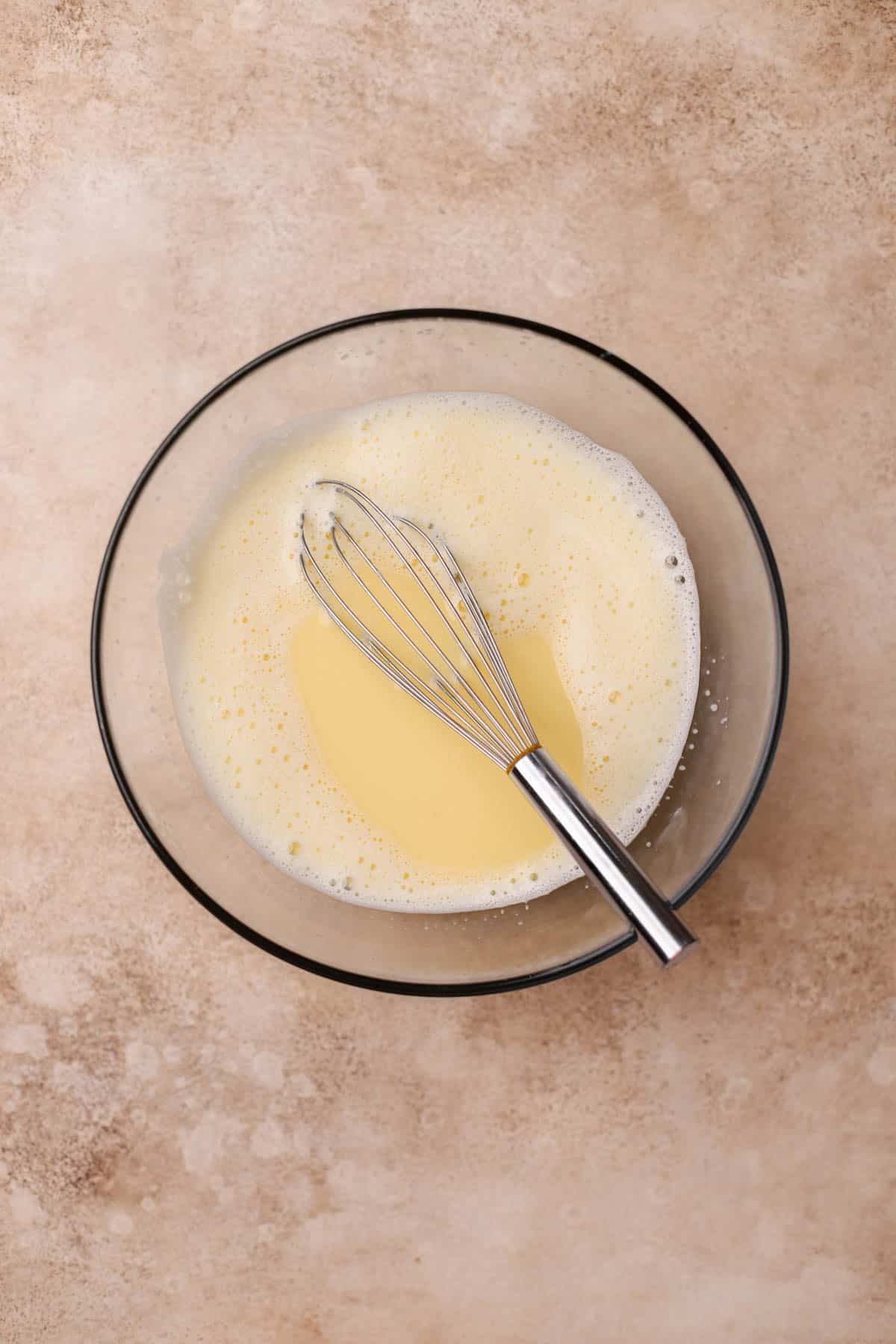
STEP 2: Whisk the egg yolks and sugar. Add the sugar and flour to the egg yolks and whisk until well combined.
STEP 3: Heat the milk. In a medium saucepan over medium heat, warm the milk until it’s steaming but not boiling. Stir occasionally to prevent scorching.
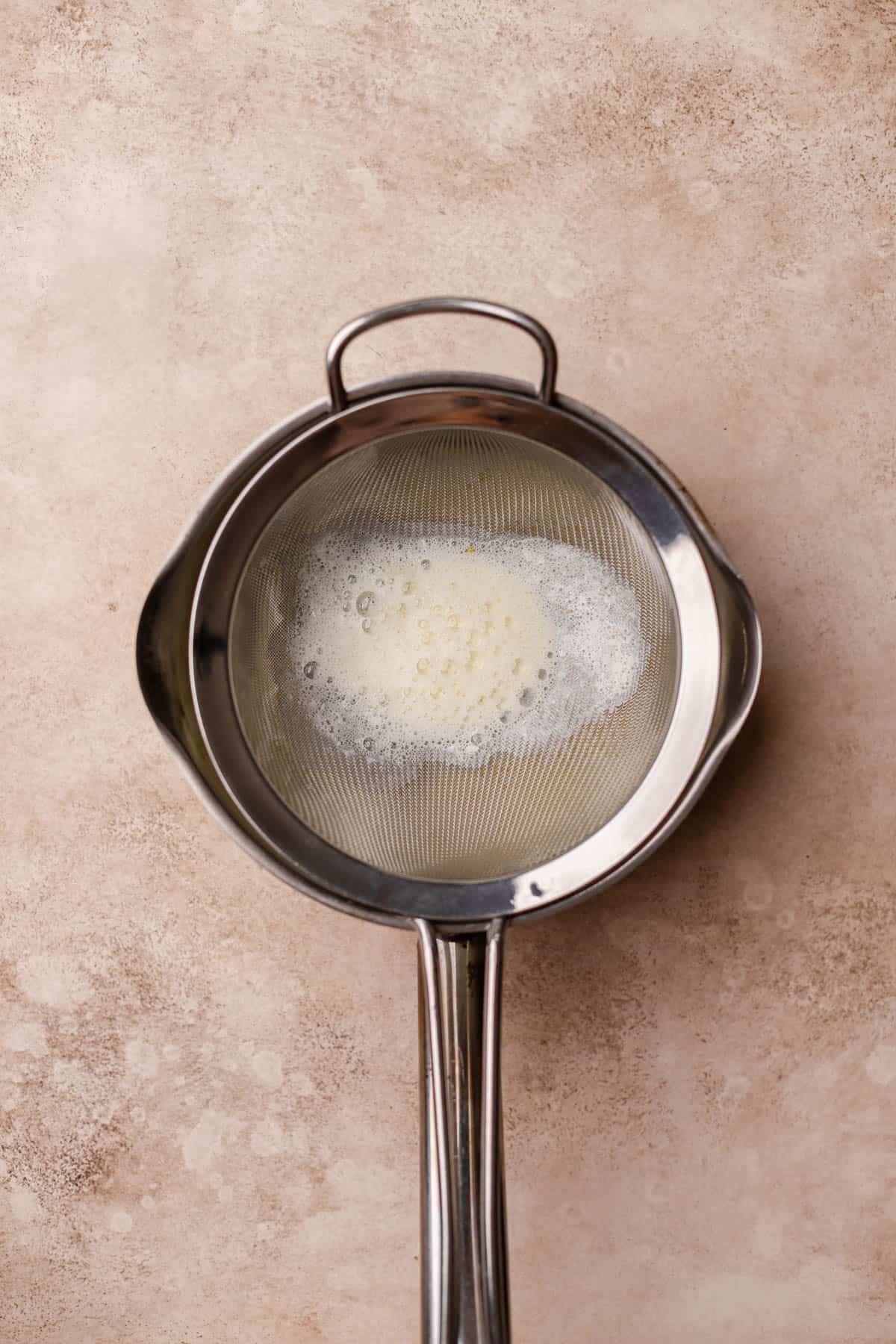
STEP 4: Temper the eggs. Slowly drizzle about 1/2 cup of warm milk into the egg mixture while whisking constantly. Then, add the remaining milk. This helps prevent the eggs from scrambling.
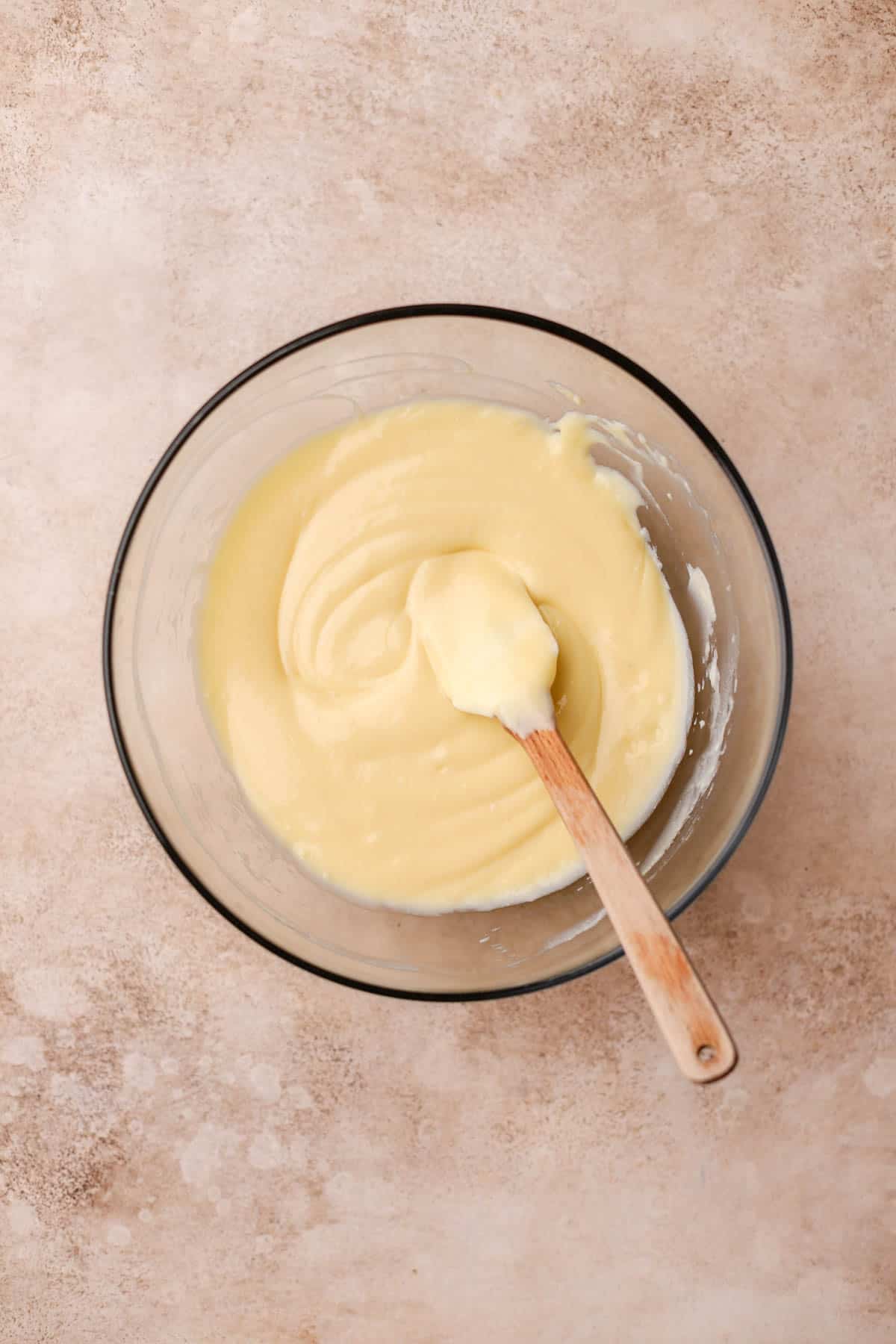
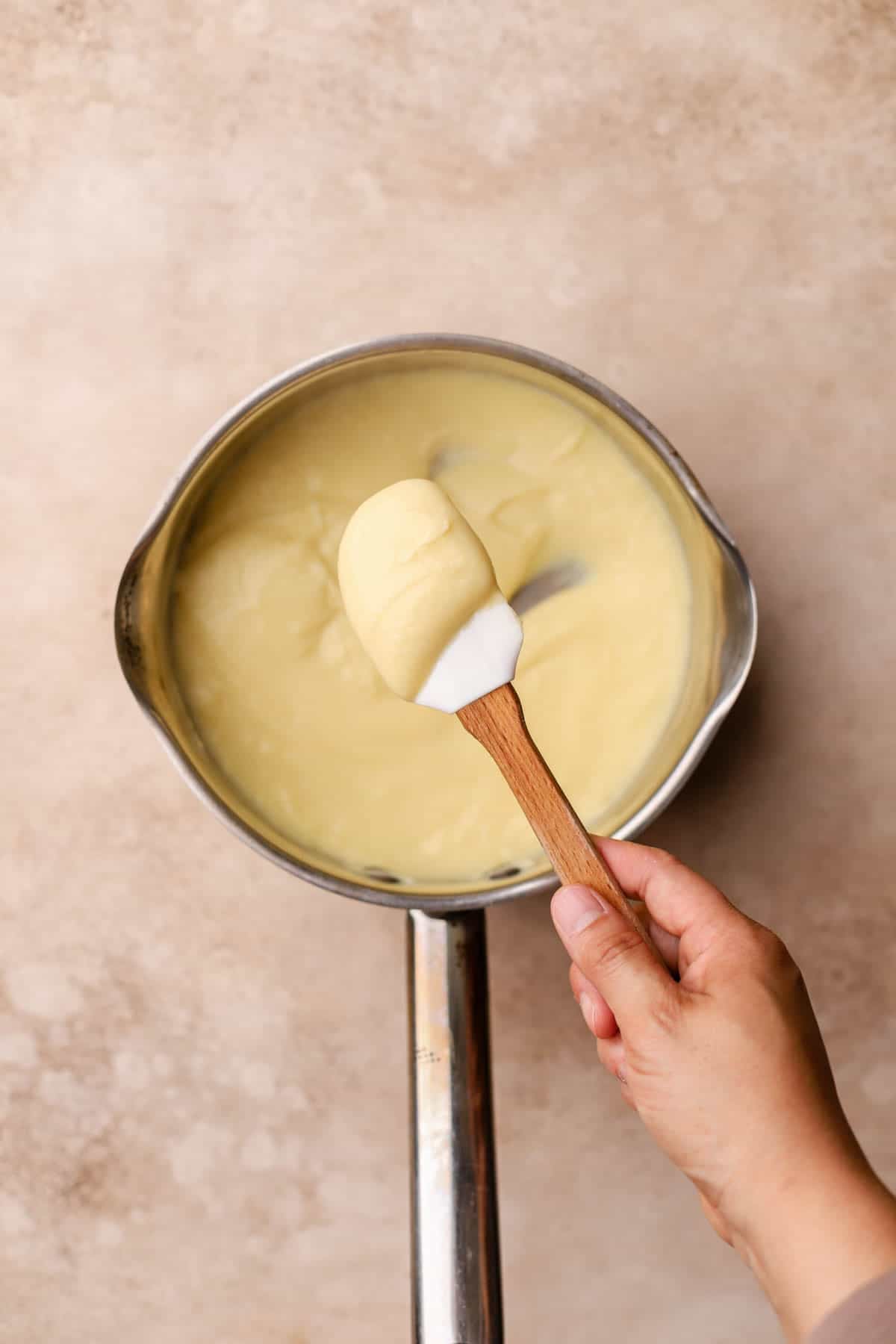
STEP 5: Cook the pastry cream. Strain the egg mixture into a clean saucepan. Then, cook over medium-low heat, whisk constantly until the mixture thickens to a pudding-like consistency.
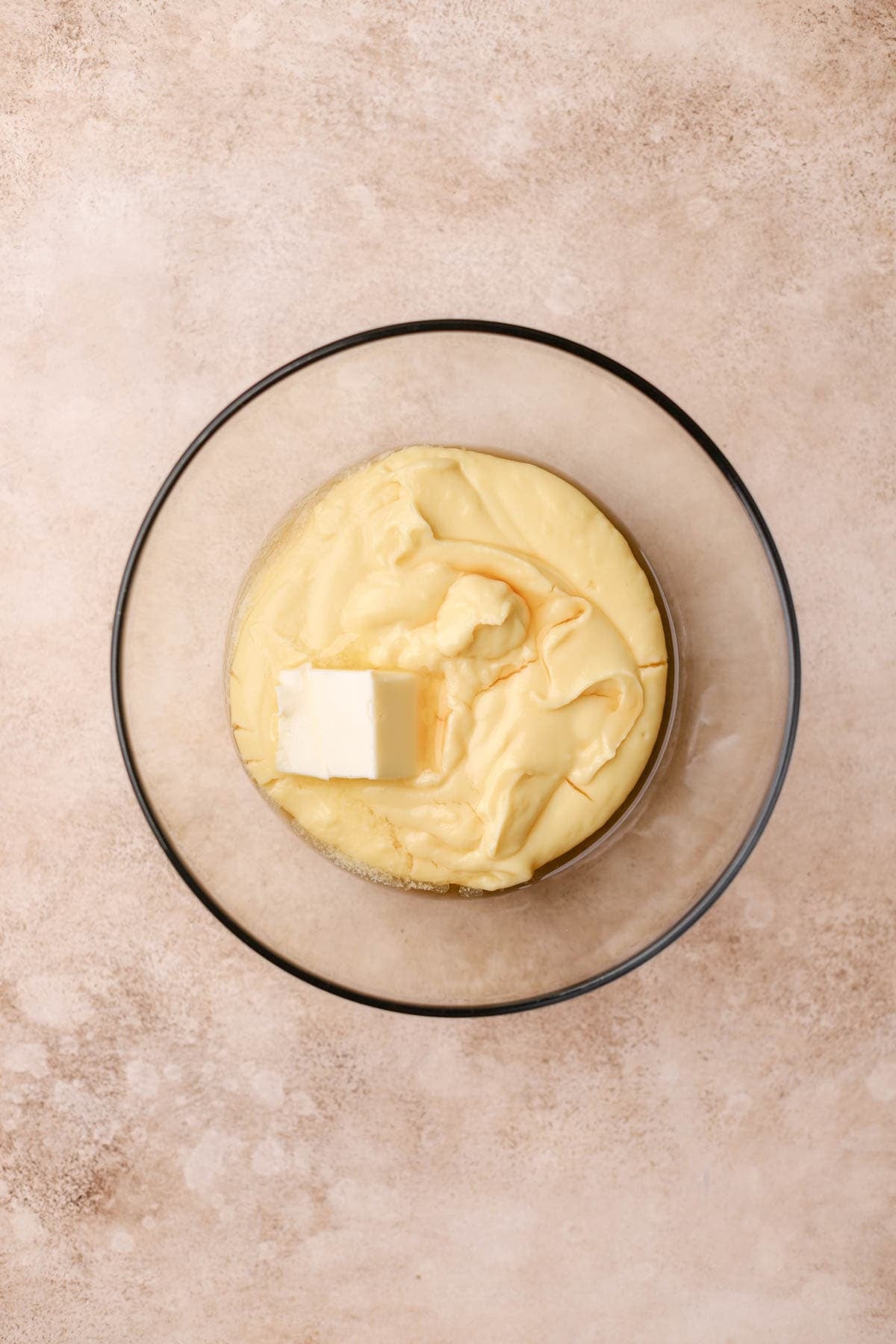
STEP 6: Add vanilla and butter. Remove the pan from the heat and stir in the vanilla and butter, mixing until smooth and glossy.
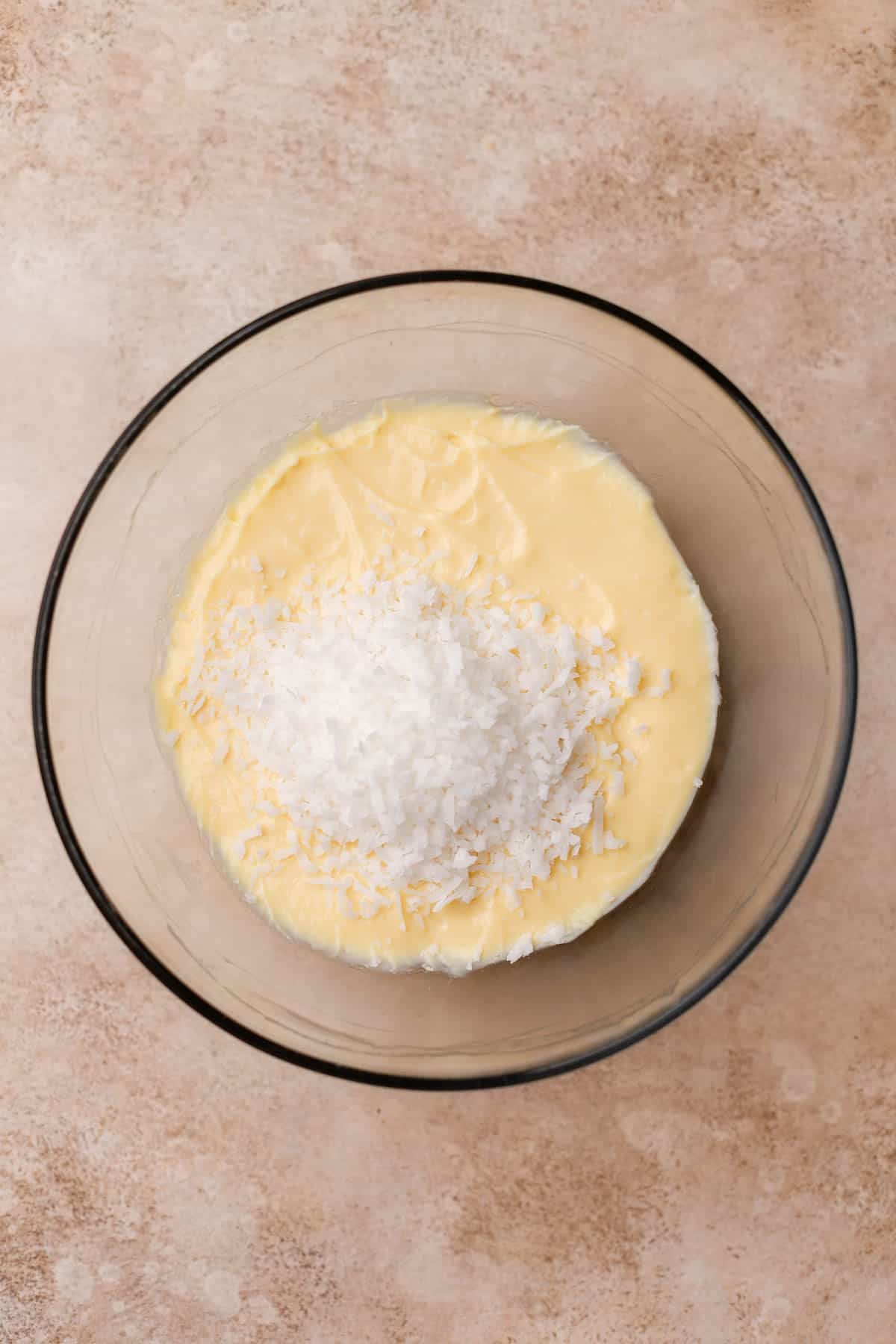
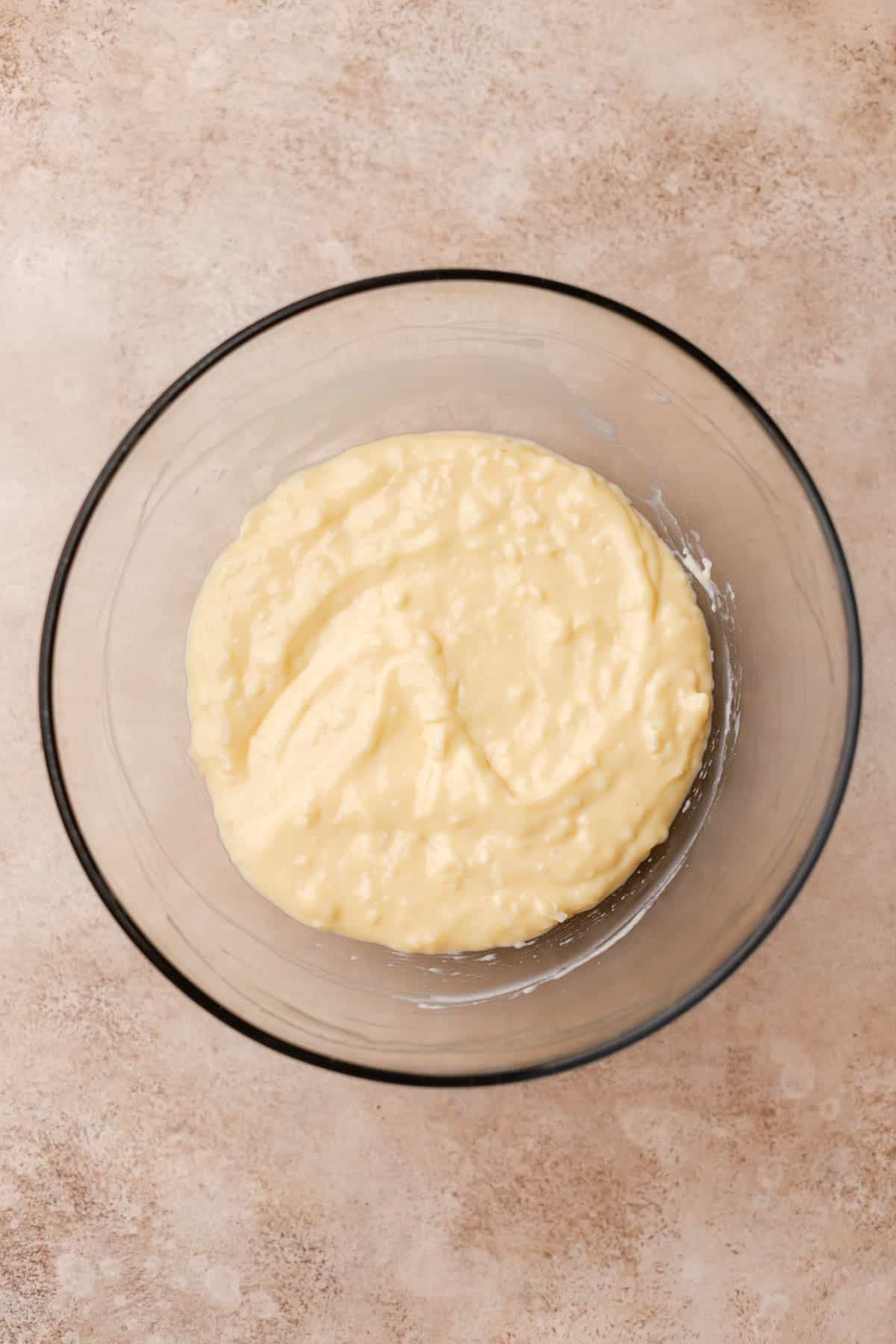
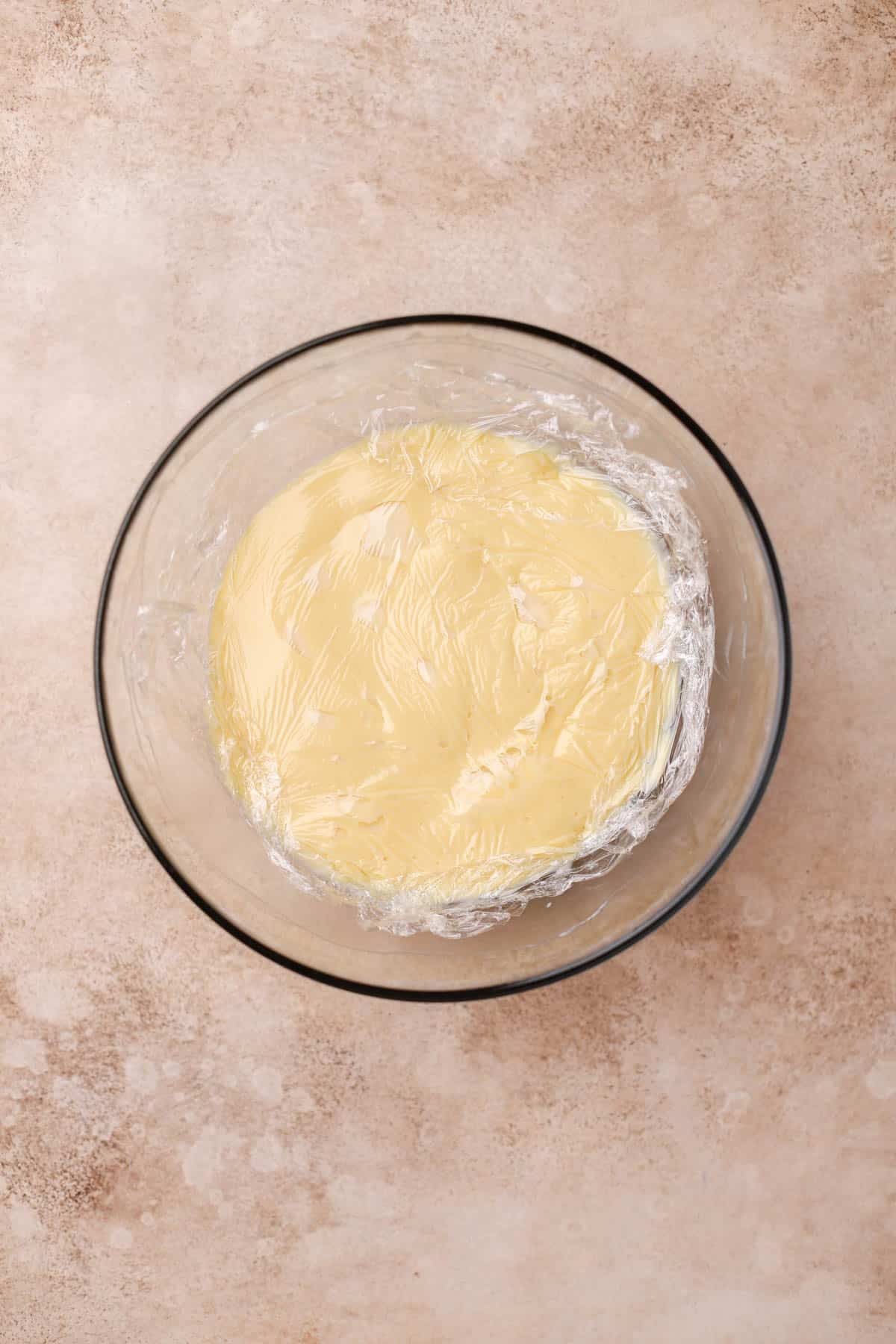
STEP 7: Cool. Transfer the pastry cream to a bowl and press a piece of plastic wrap directly onto the surface to prevent a skin from forming. Let it cool at room temperature for 20 minutes, then refrigerate for at least 4 hours or overnight. Once set, stir in the shredded coconut.
How To Make Coconut Cake
STEP 1: Preheat oven and prepare cake pans. Preheat oven to 350℉. Grease three 6-inch round cake pans with nonstick spray, then line the bottoms with parchment paper for easy removal.
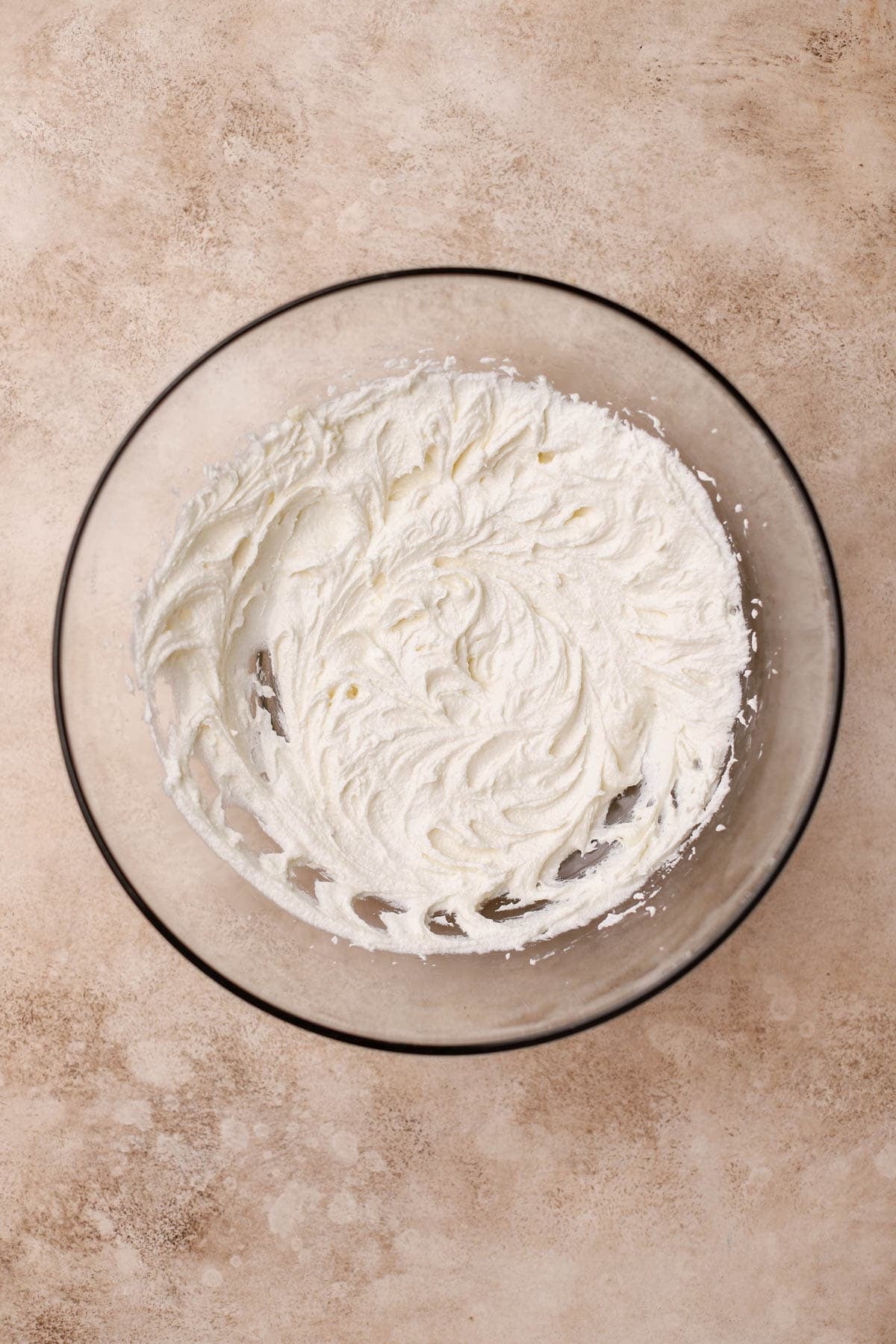
STEP 2: Sift the dry ingredients. In a medium bowl, sift together the cake flour, baking powder and salt. Set aside.
STEP 3: Cream the butter. In a large mixing bowl, beat the butter, sugar, and canola oil together using a hand or stand mixer on medium speed until light and fluffy, about 2-3 minutes. Scrape down the sides of the bowl as needed.
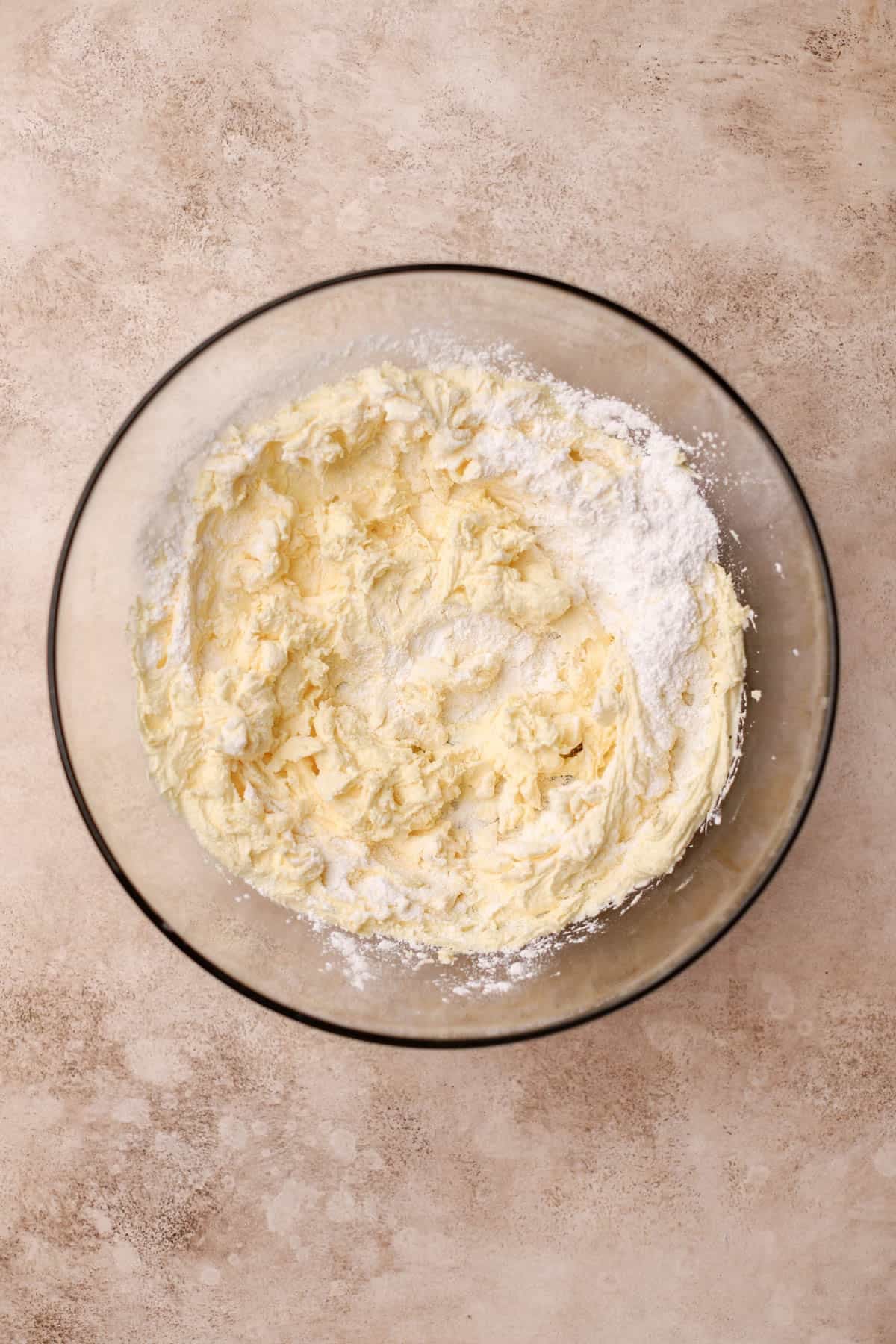
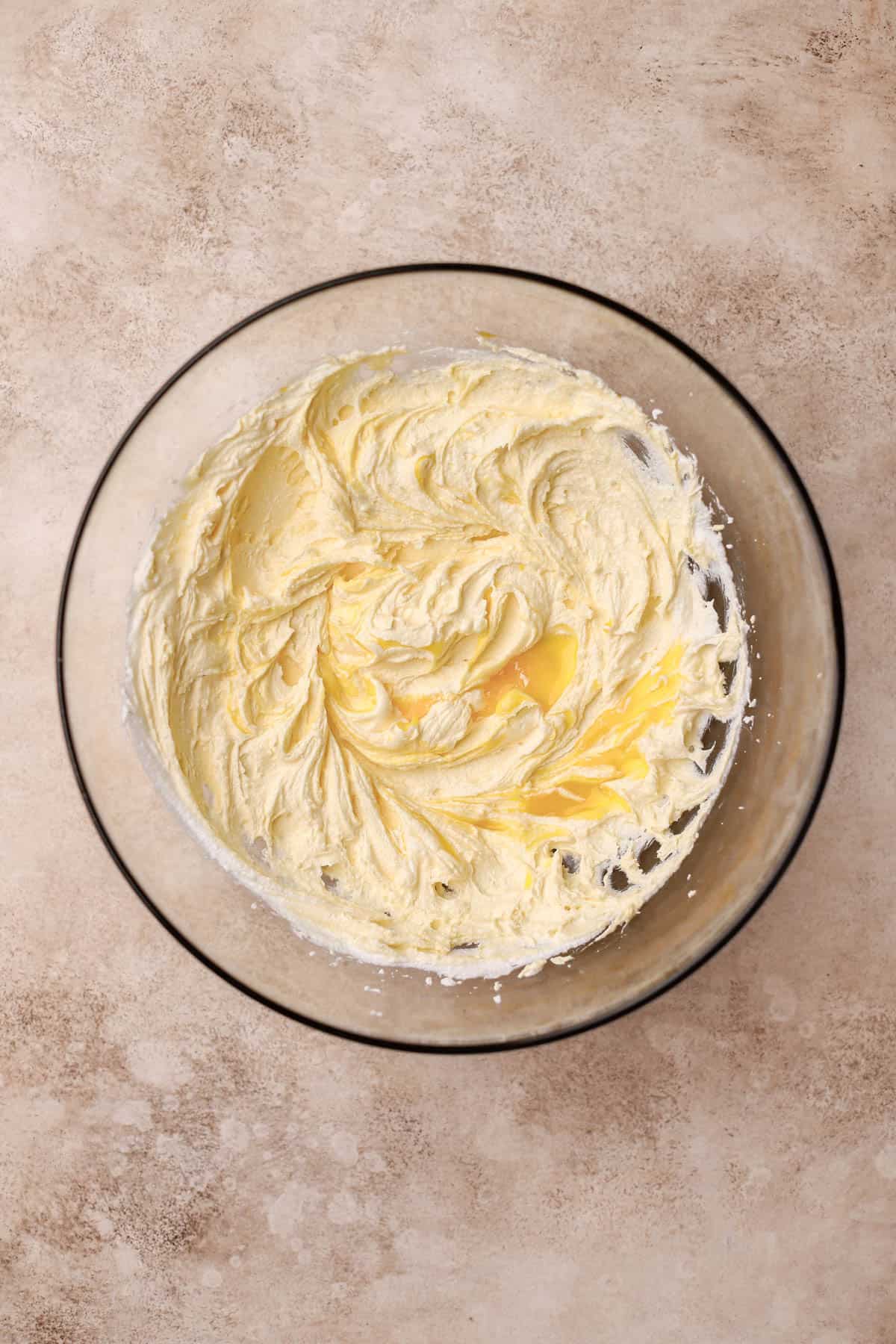
STEP 4: Add the eggs and extracts. Mix in the egg, egg whites, and extracts, beating until smooth and fluffy.
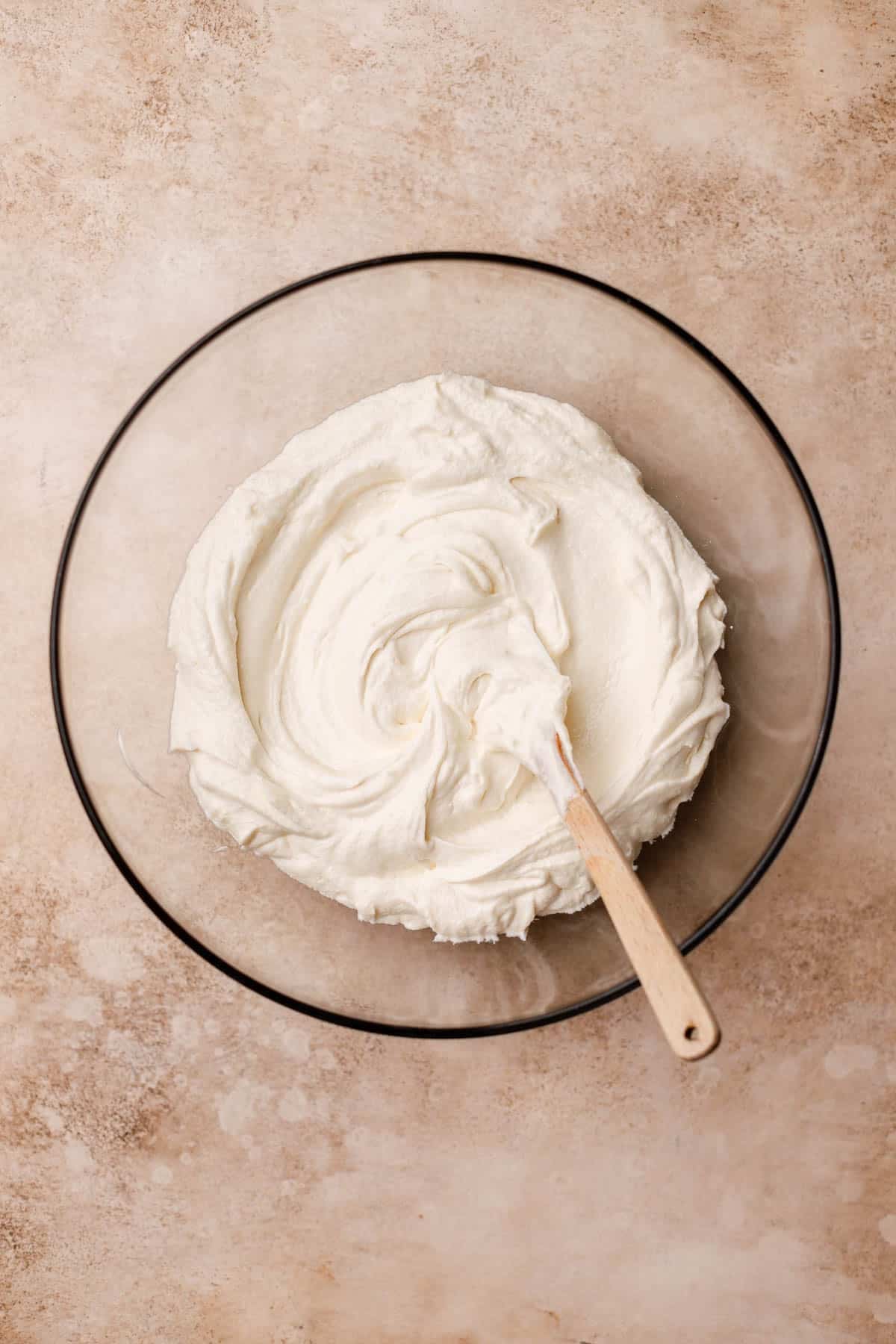
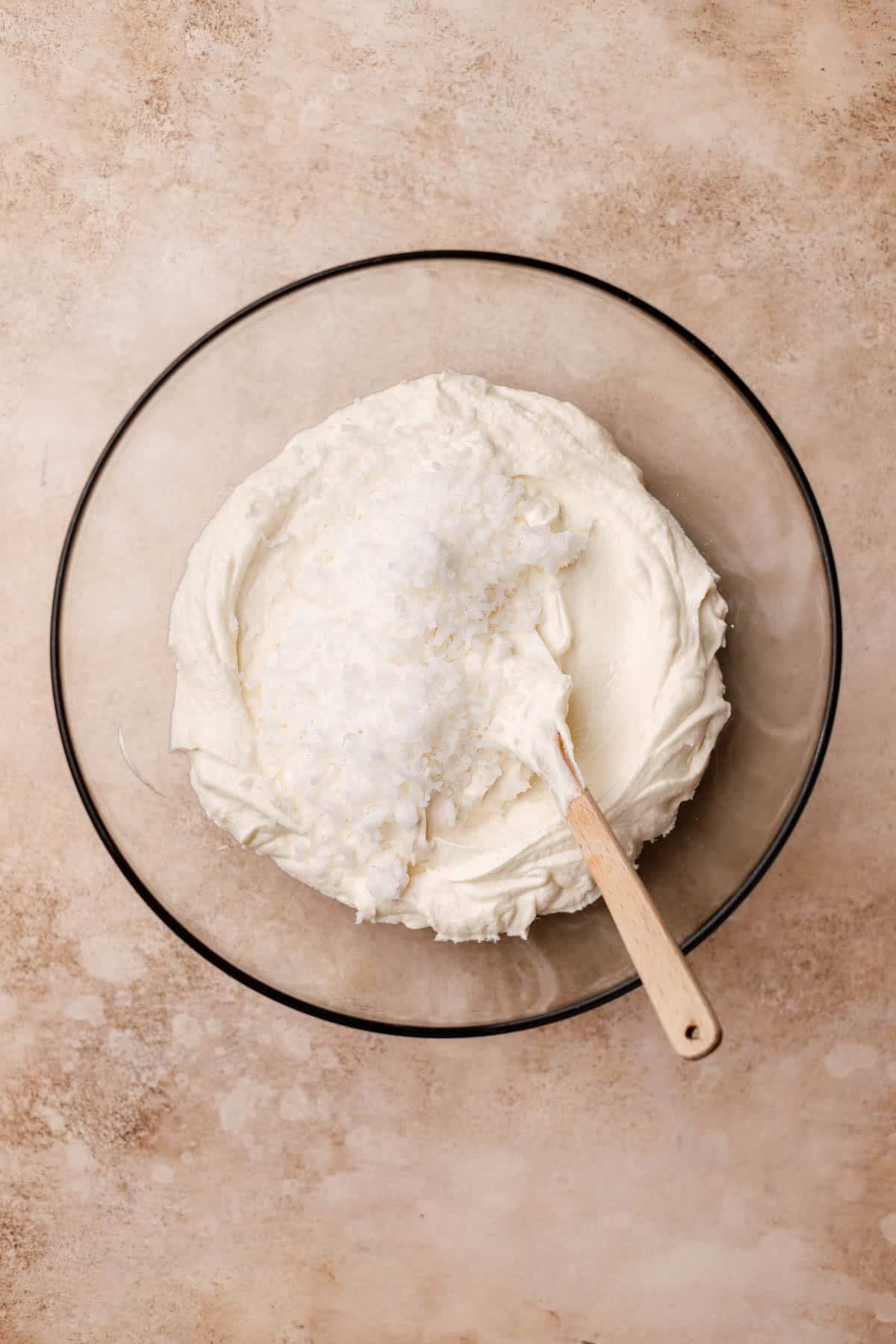
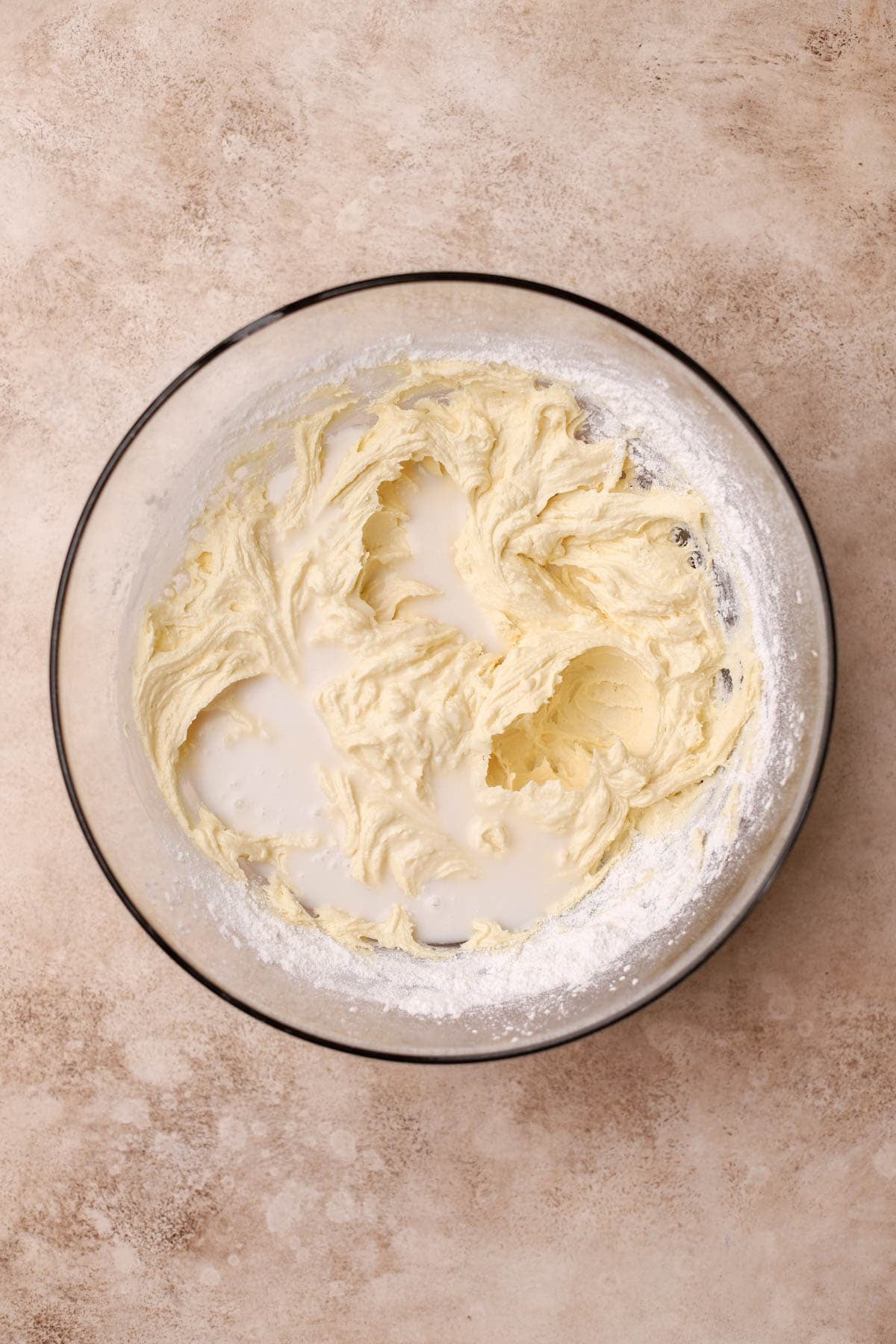
STEP 5: Blend flour mixture and coconut milk. Add the flour mixture to the butter mixture in three additions, alternating with the coconut milk (starting and ending with the flour). Mix on low speed until just combined.
STEP 6: Bake. Divide the batter evenly between prepared cake pans. Bake in the middle rack for 20-22 minutes, or until a toothpick inserted in the center comes out clean.
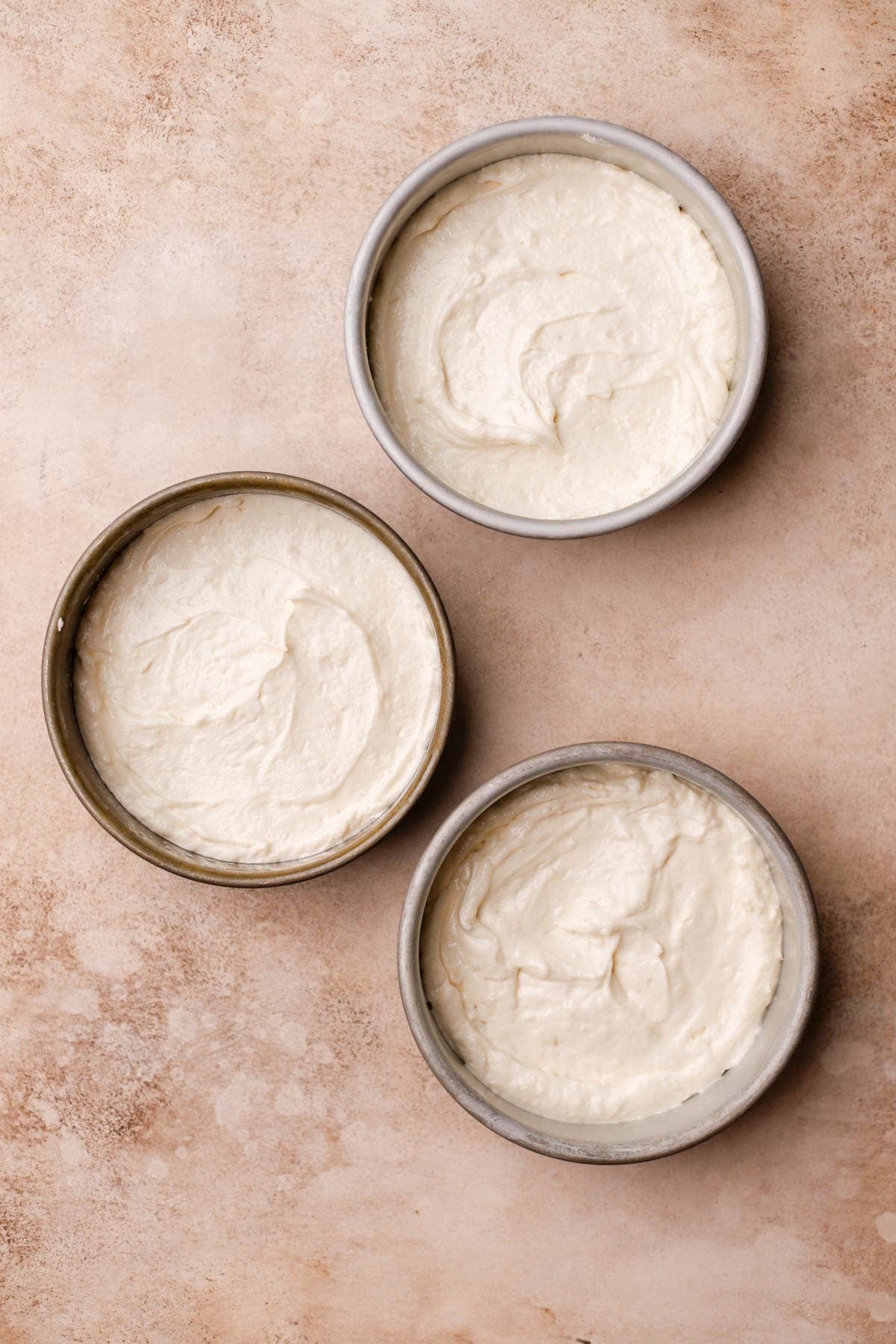
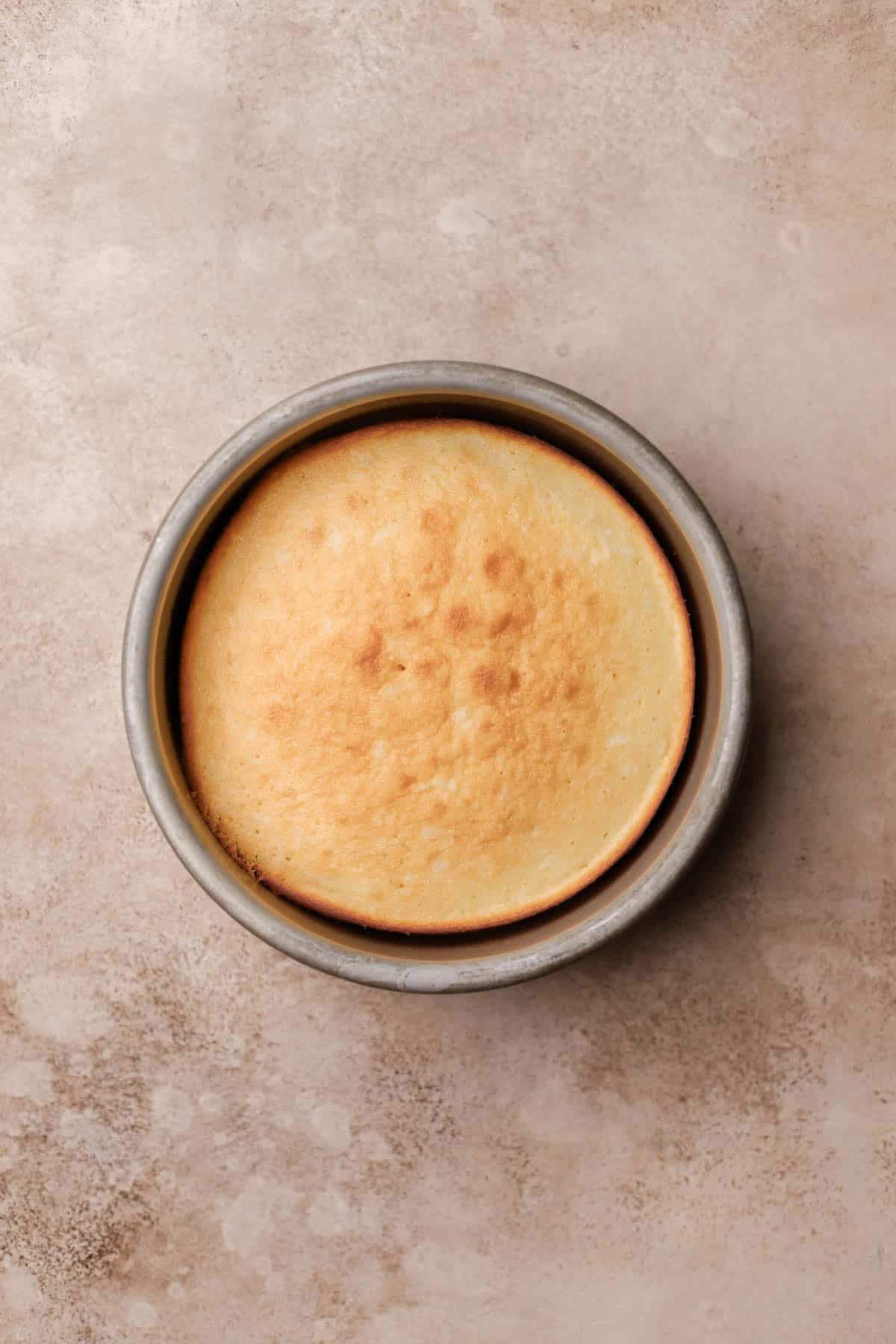
STEP 7: Cool. Let the cakes cool on a wire rack until they are completely cool, then run a knife around the edges to loosen the cake from the pan.
Coconut Cream Cheese Frosting
STEP 1: Beat the cream cheese. In a large bowl, beat the softened cream cheese and softened butter together on medium speed until smooth and creamy, about 2-3 minutes.
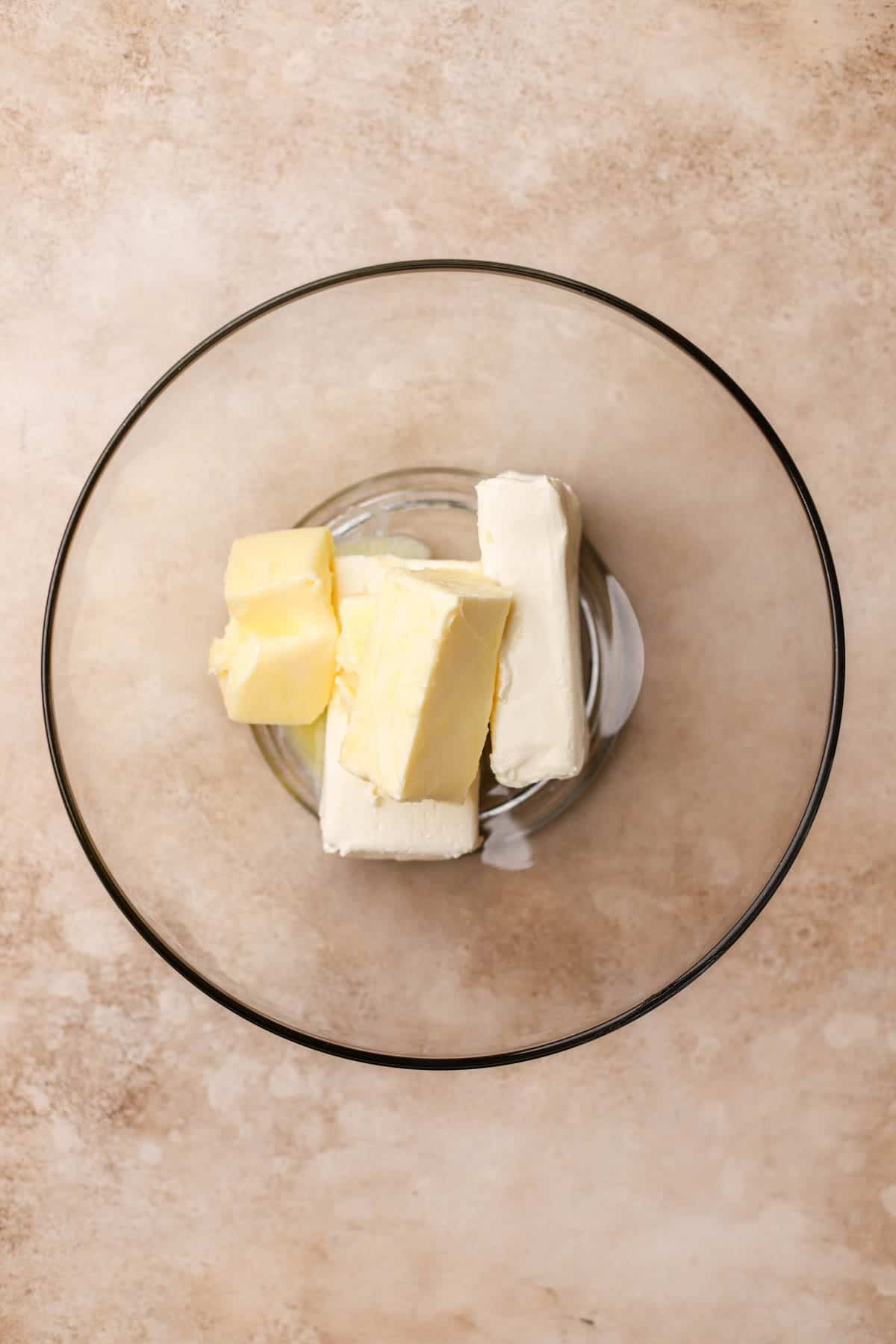
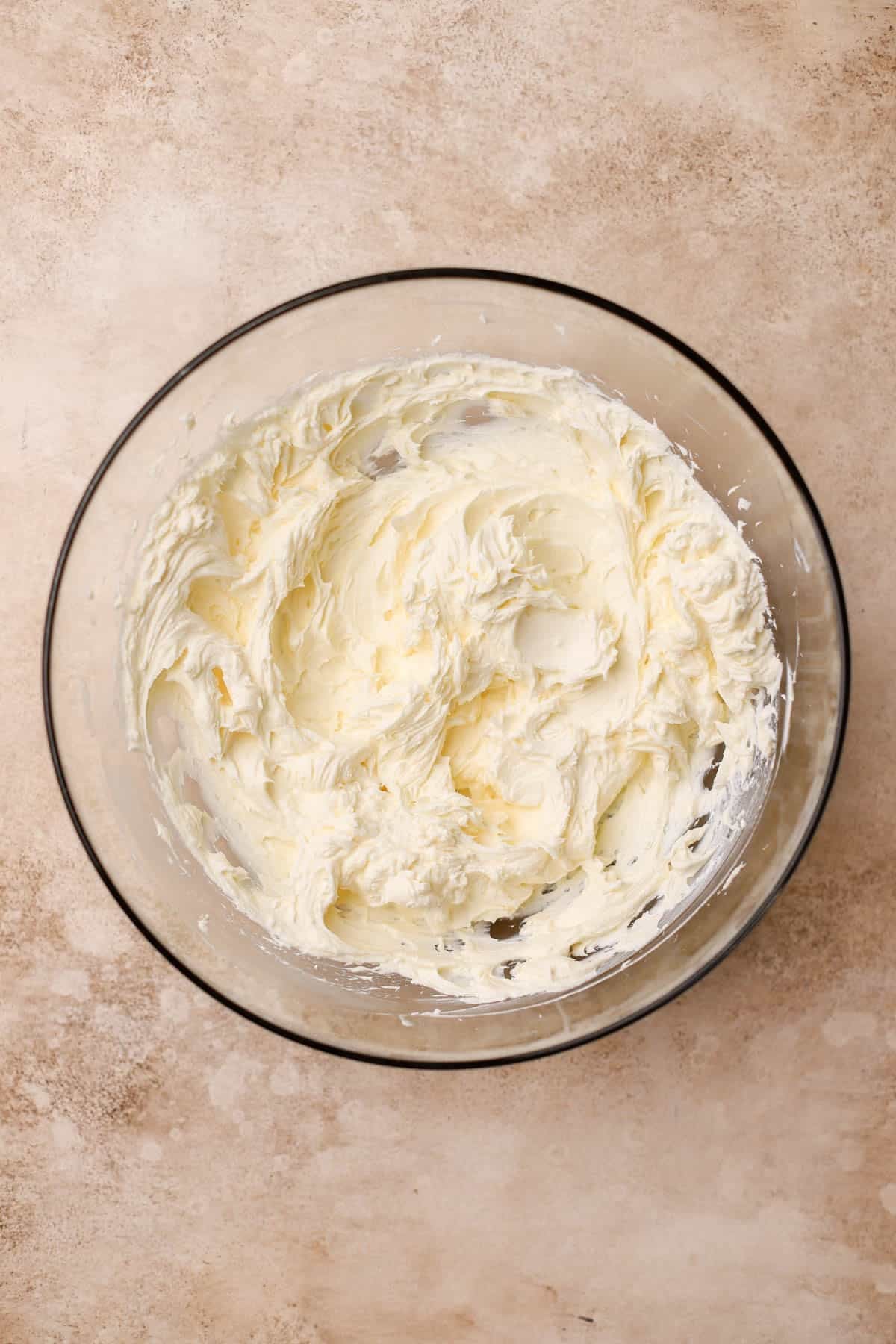
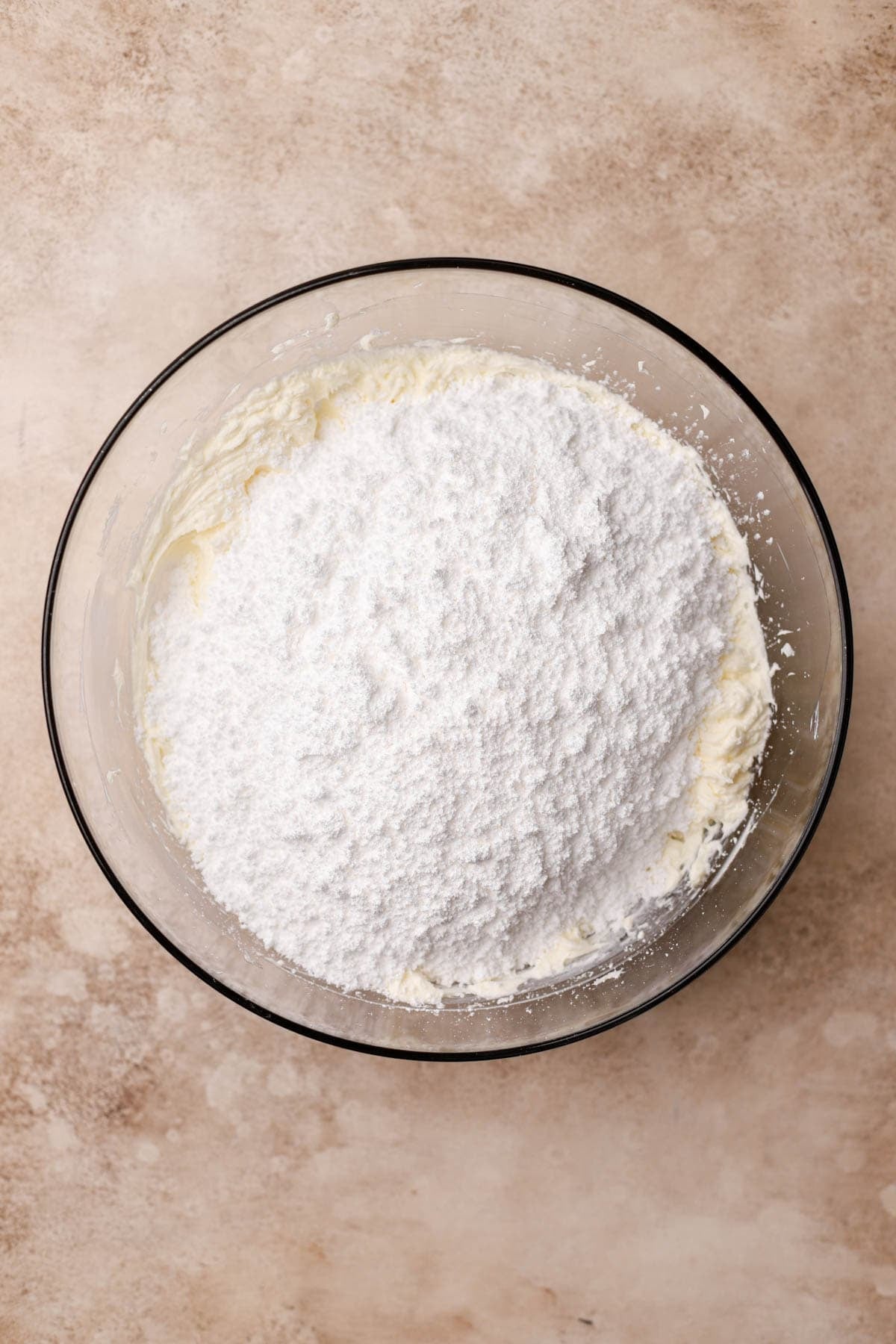
STEP 2: Add the powdered sugar. Gradually add the powdered sugar, a little at a time, mixing on low speed until fully incorporated.
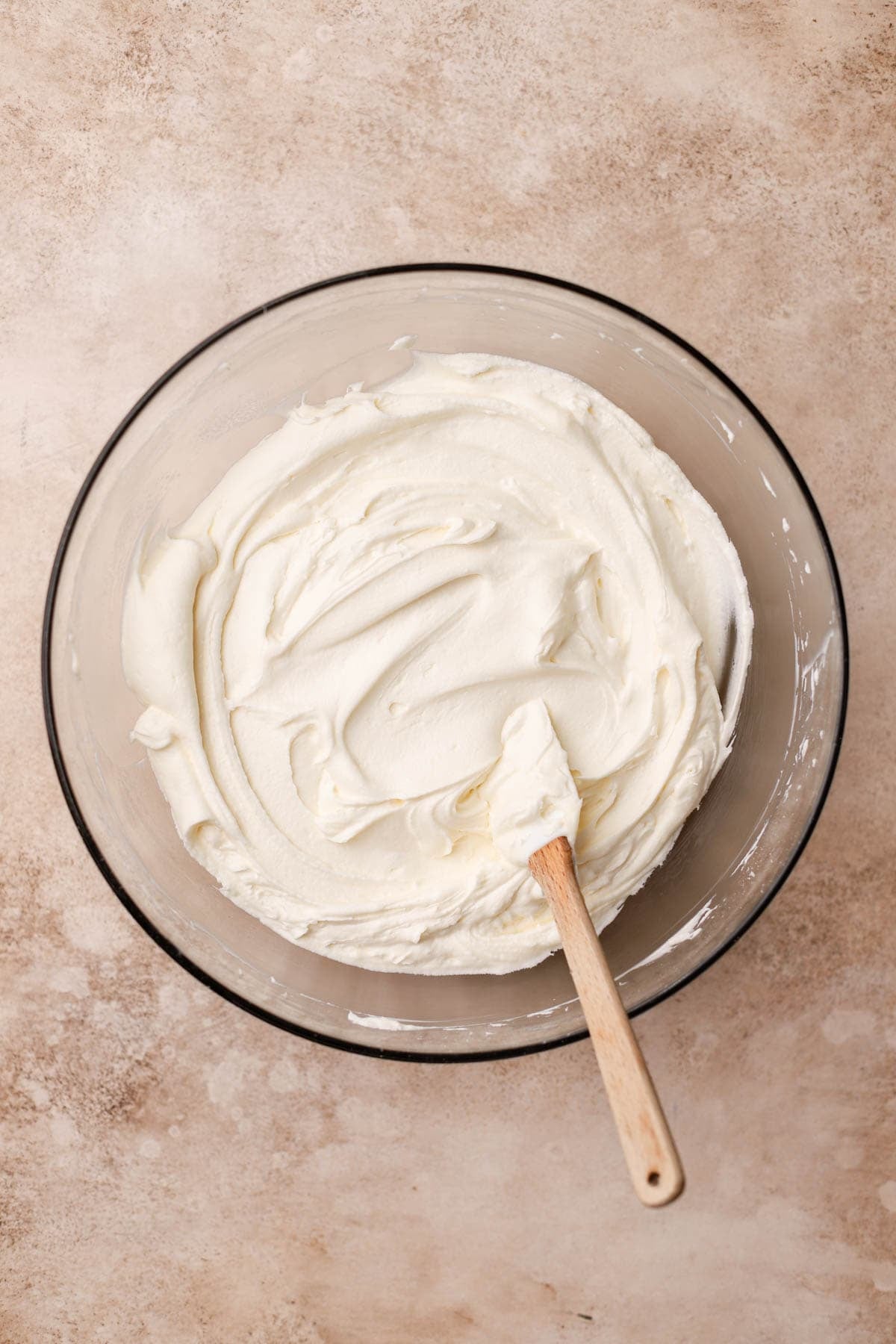
STEP 3: Add extracts. Add the vanilla and coconut extract to the frosting. Then, whip on medium speed until smooth and fluffy.
Assembling The Coconut Layer Cake
STEP 1: Prepare the cake layers. Use a sharp serrated knife to create a flat base on each cake layer, ensuring they are even and ready to stack.
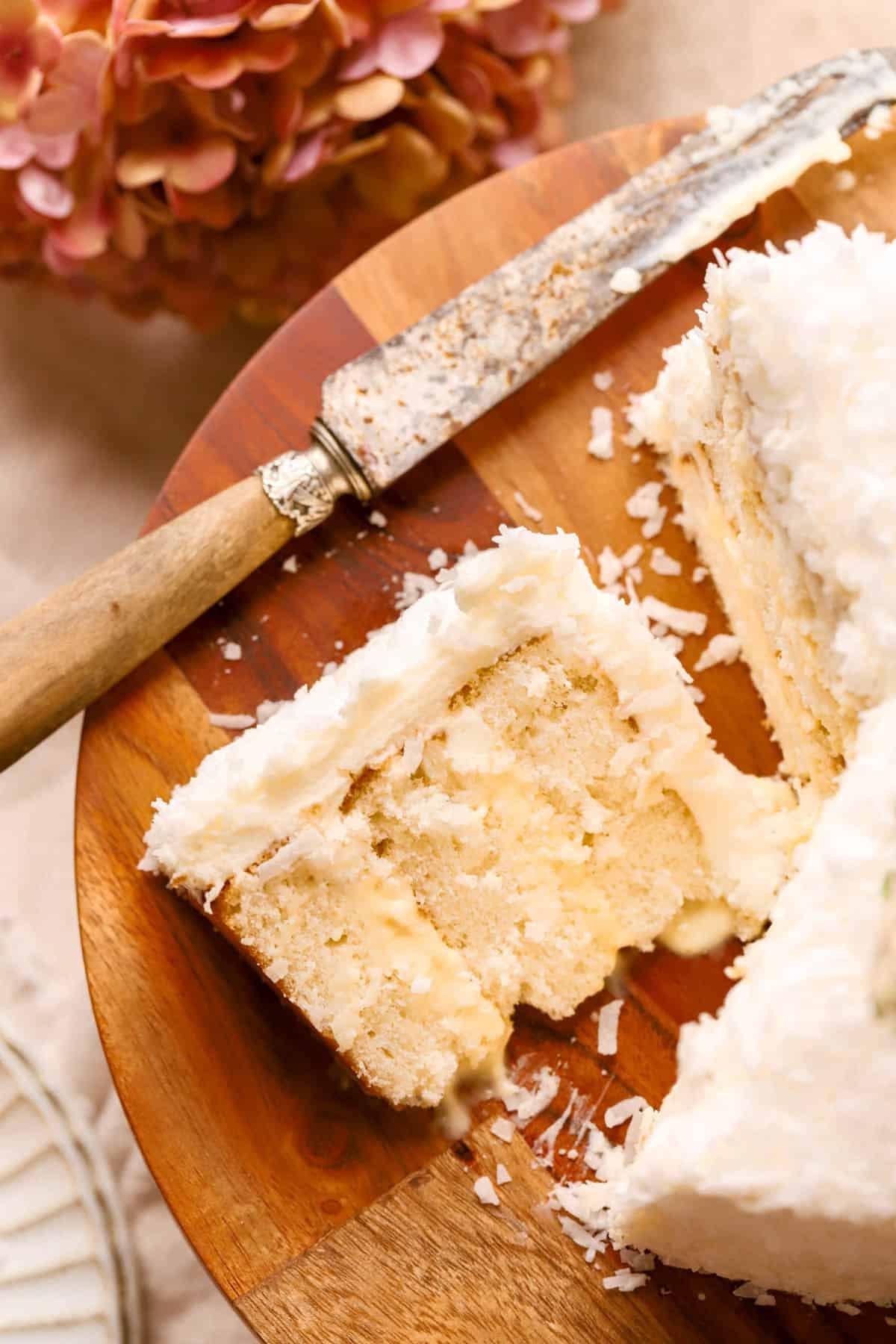
STEP 2: Fill the cake layers. Pipe a dollop of frosting onto your serving plate or cake board. Then, place the first cake layer onto the serving plate. Pipe a boarder of cream cheese frosting around the edge of the cake to create a “dam” that will hold the pastry cream filling. Then, fill the center inside the piped border with pastry cream. Spread evenly within the border.
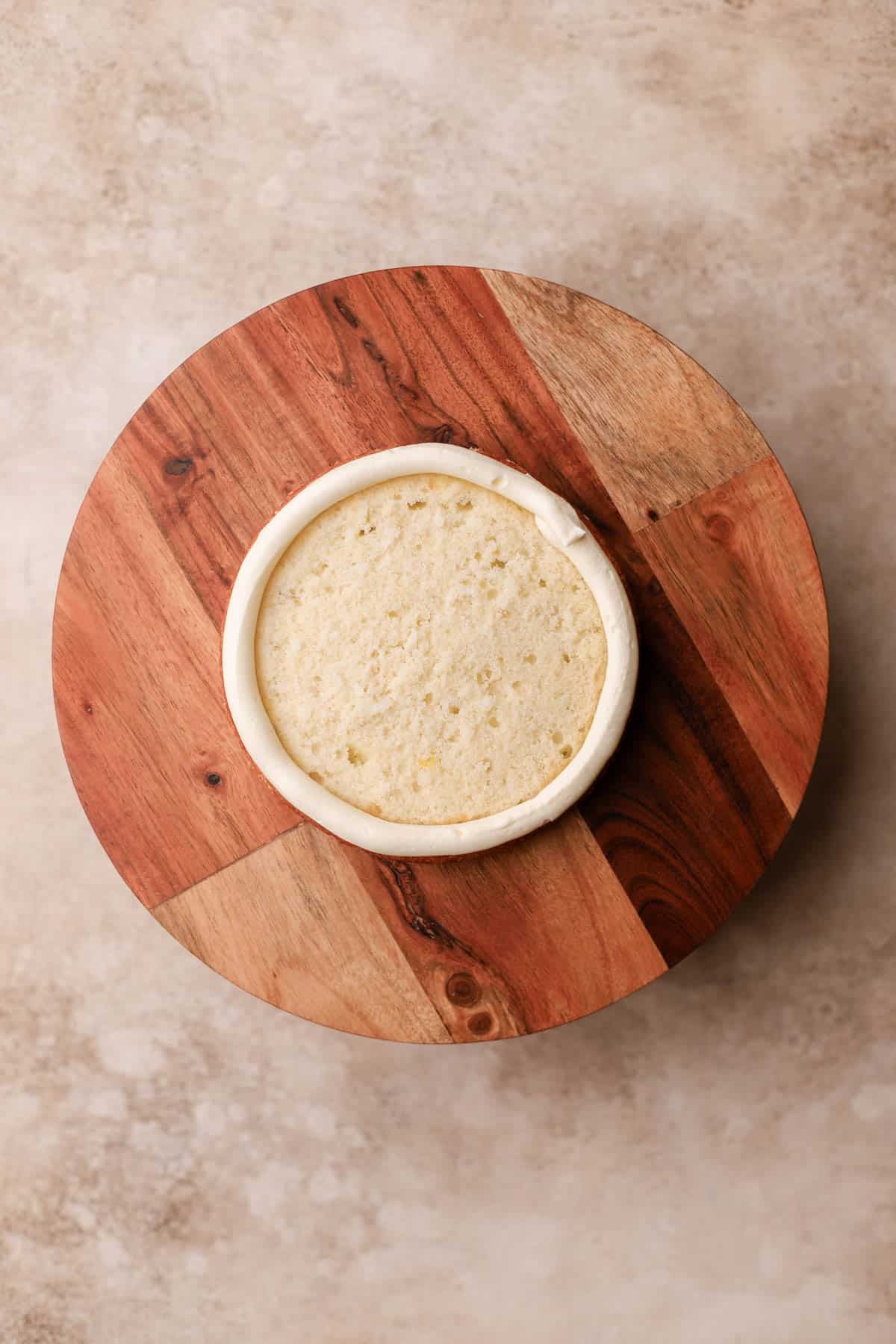
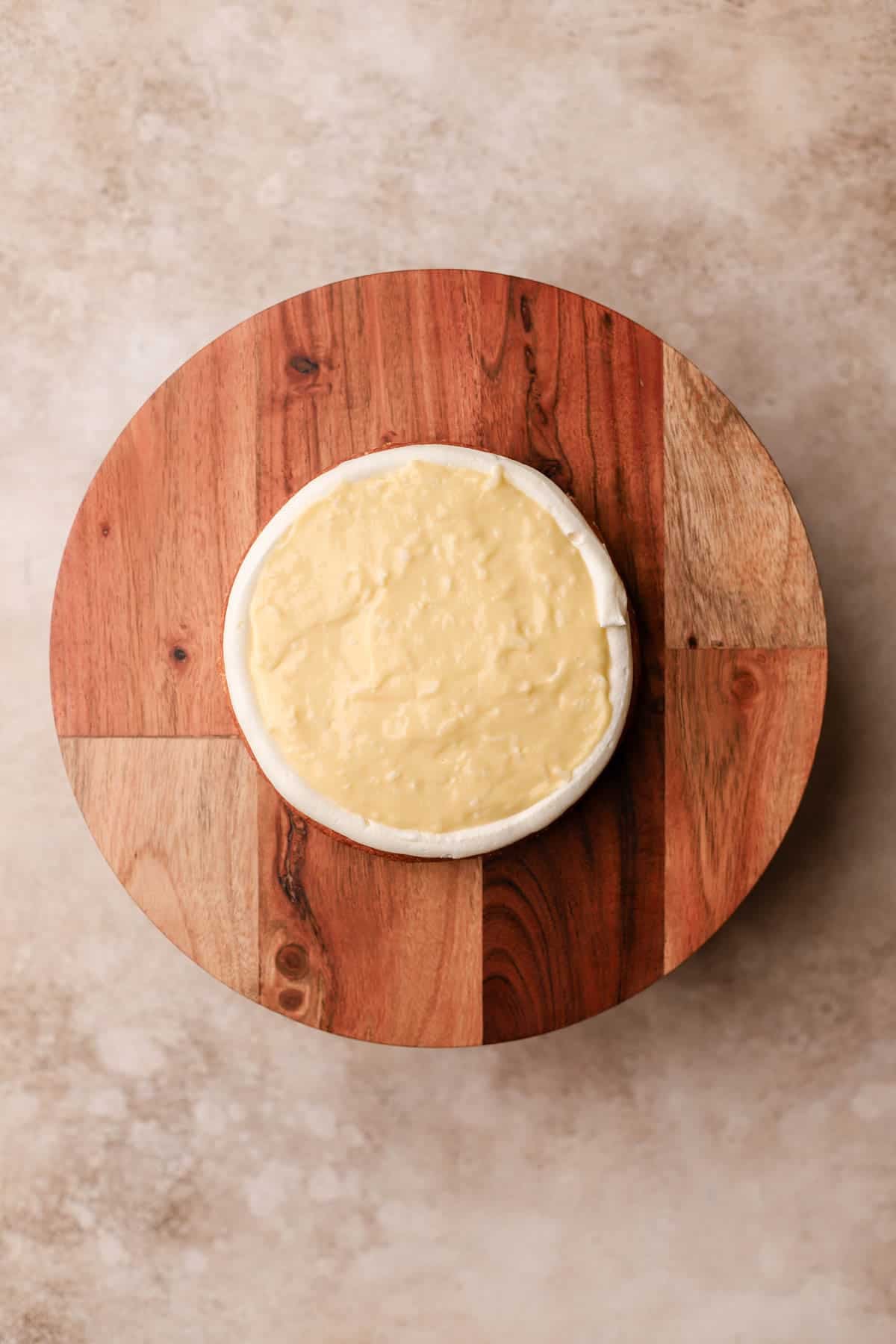
STEP 3: Stack second cake layer. Place the second cake layer on top of the filled layer, gently pressing down to secure it in place. Repeat the process with piping the border and filling the center.
STEP 4: Add the final cake layer. For the last layer, flip it upside down so that bottom side is facing up, giving the cake a smooth, even top to frost.
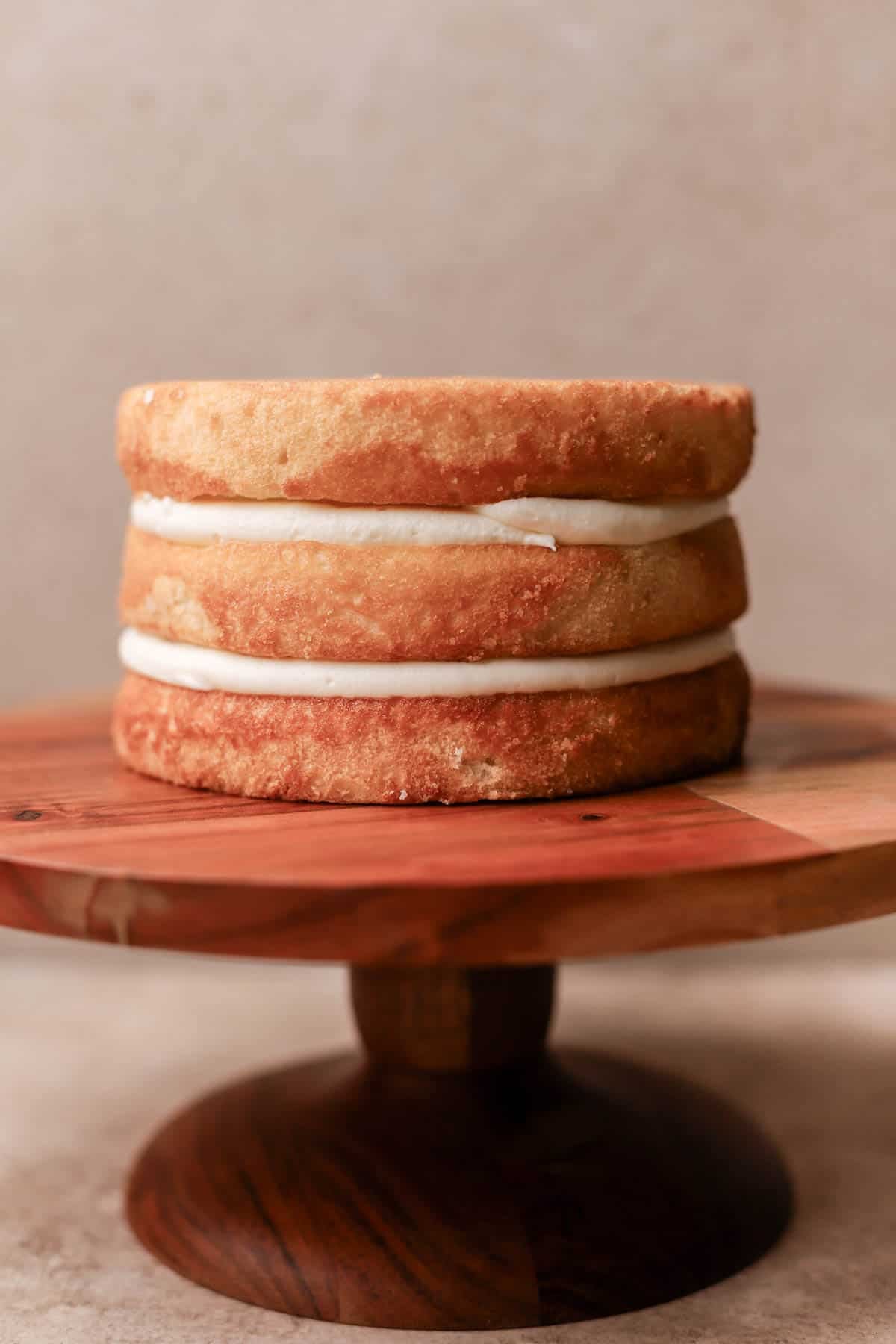
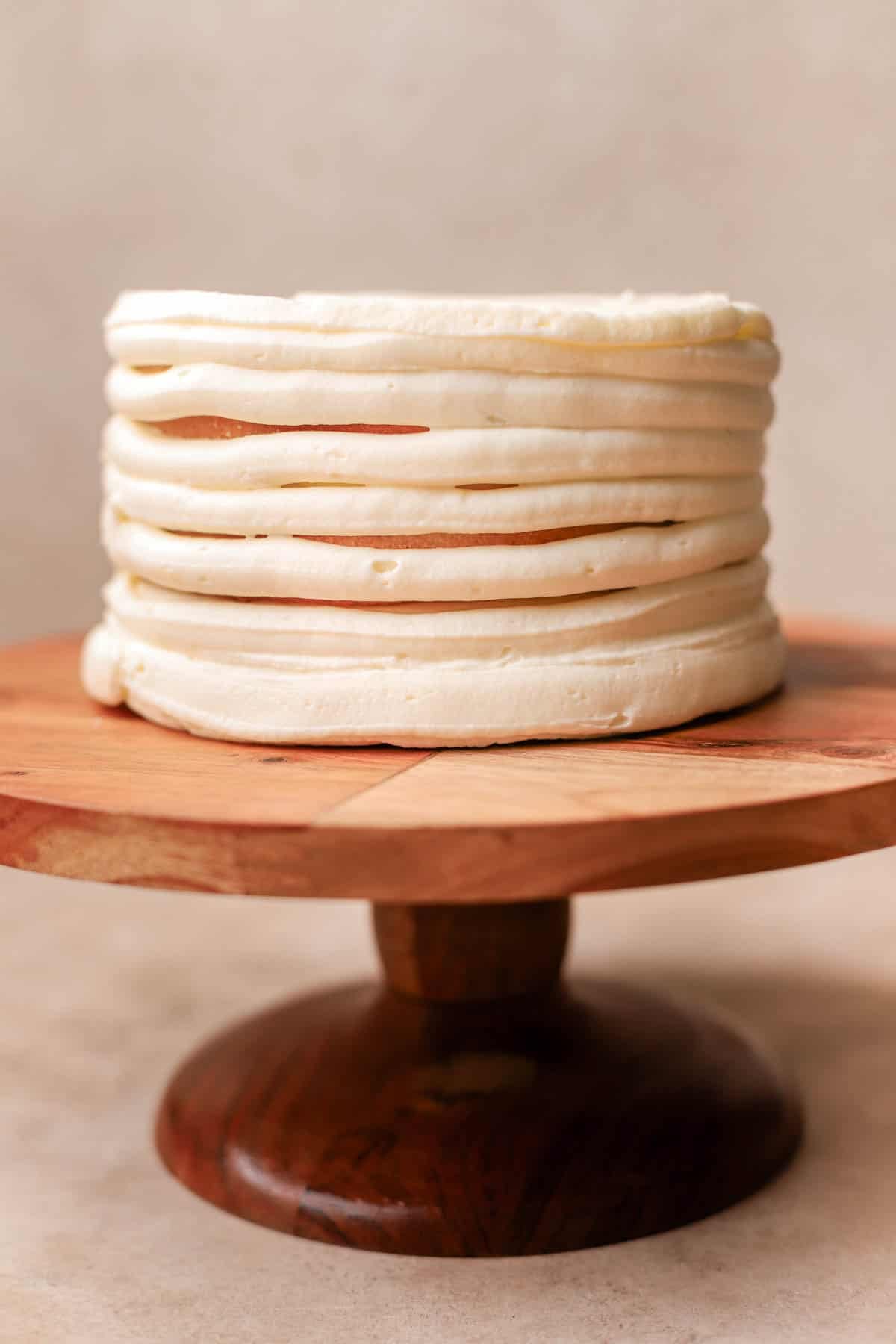
STEP 5: Frost the cake. Cover the entire cake with the rest of the cream cheese frosting. Don’t worry about being too perfect with the frosting, as the shredded coconut will help hide any imperfections.
STEP 6: Add the coconut. Gently press the shredded coconut onto the sides and top of the cake.
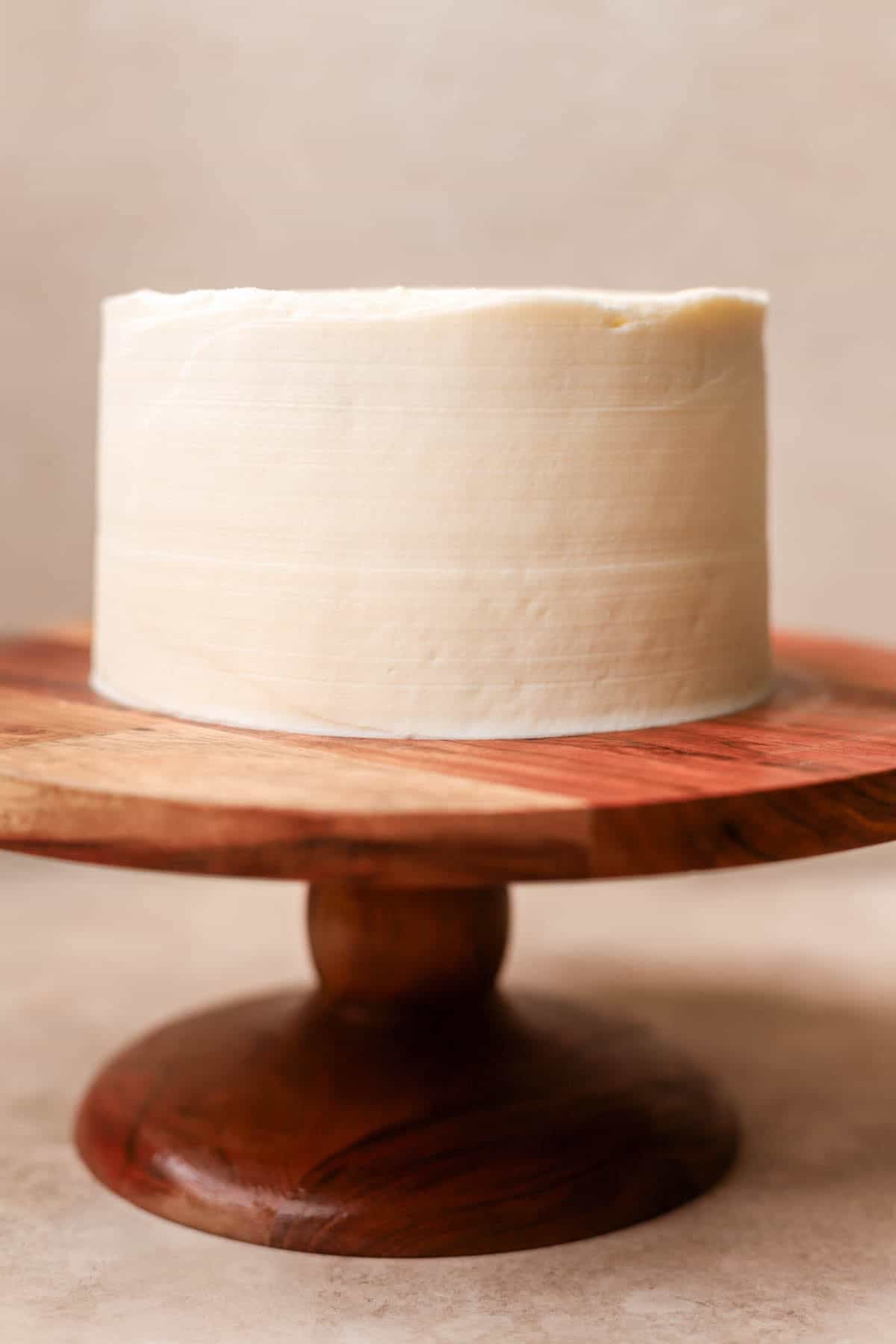
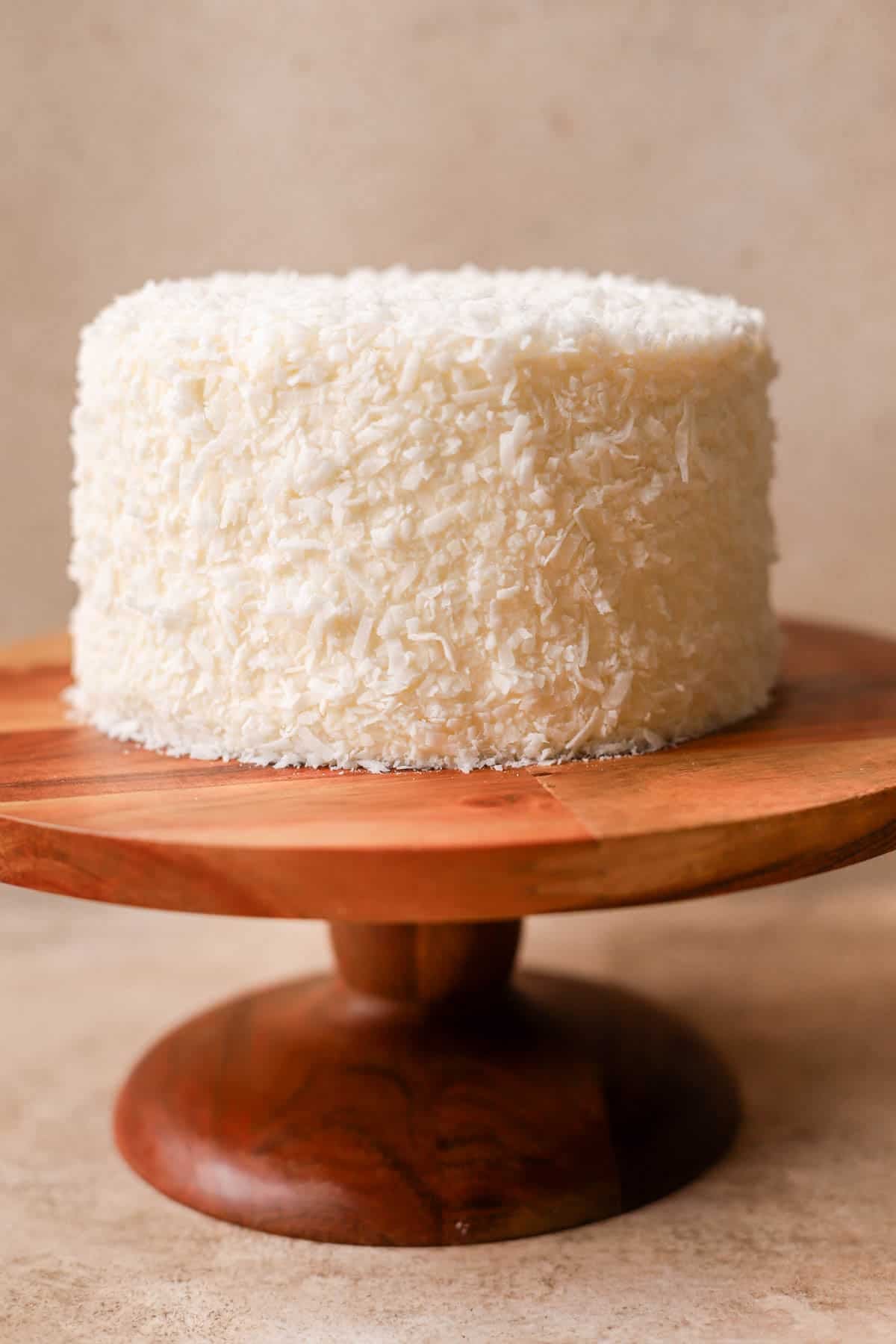
STEP 7: Chill the cake. Refrigerate the assembled cake for at least 1 hour to allow the frosting to set and firm up before serving.
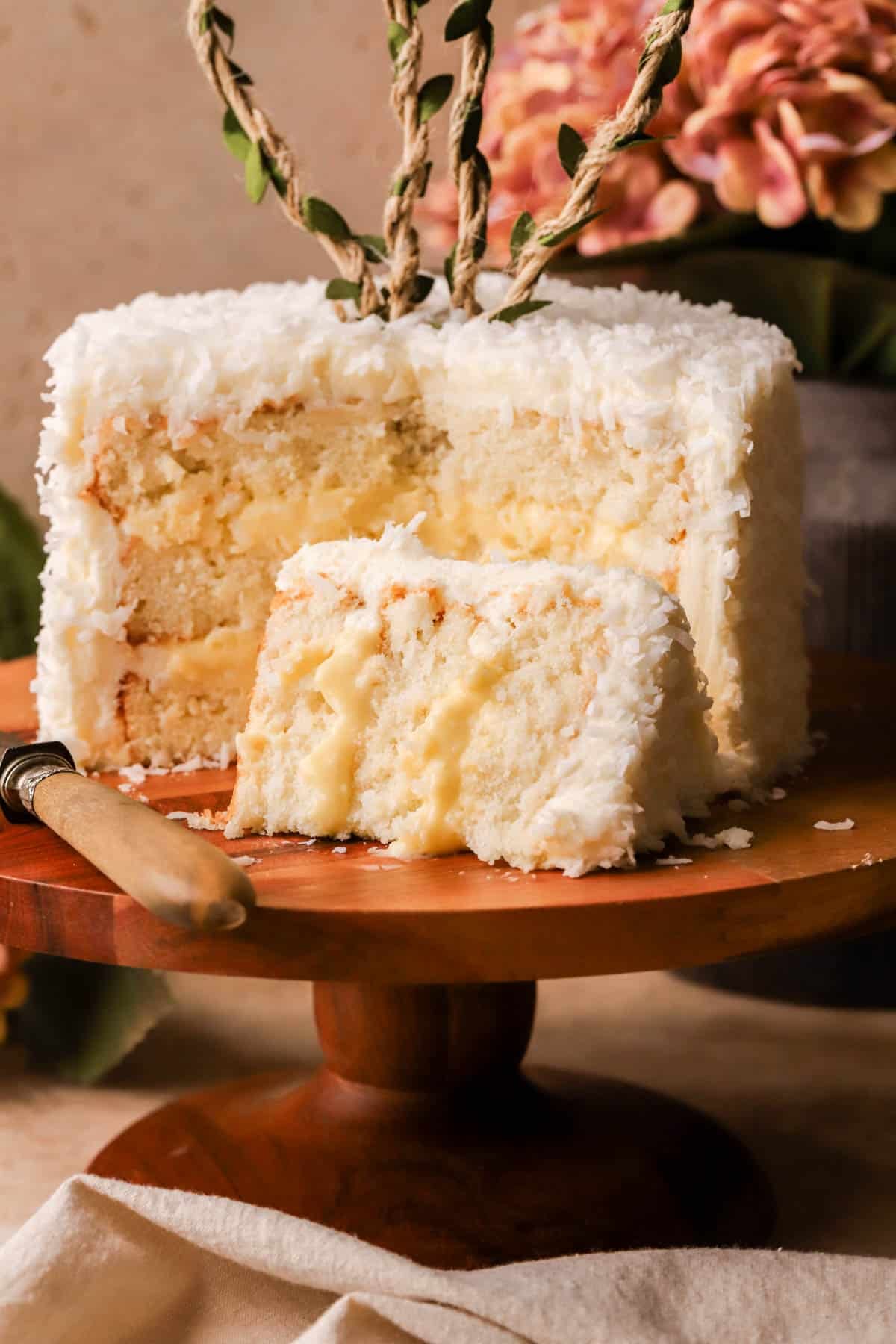
STEP 8: Serve. For an extra festive touch, I added some cute bunny ears, made out of paper wrapped stem wire and ribbon to the top before serving.
Expert Baking Tips
Room temperature ingredients. Make sure your ingredients are at room temperature before you start. This will help them combine smoothly, creating a light, fluffy texture for your cake and frosting.
Spoon and level the flour. Using a spoon, scoop the flour from the container and level it with the back of a knife or spatula. This method prevents the flour from being packed down, which can lead to using too much flour and making your cake dense.
Don’t over mix the batter. Over mixing can lead to a dense cake. Mix the ingredients until they are just combined, especially after adding the flour. This will keep the cake light and fluffy.
Silky smooth pastry cream. To prevent the eggs from curdling, slowly whisk a small amount of hot milk into the egg mixture. Do not add it all at once. After they’re tempered, you can gradually add the rest of the milk.
A cake for every celebration. This cake isn’t just for Easter! You can serve it plain with just the coconut for a simple yet elegant treat, or get creative by adding fresh flowers or any other type of cake topper to match your celebration. It’s perfect for birthdays, brunch or any special gathering.
Frequently Asked Questions
Insert a toothpick into the center of the cake. If it comes out clean or with just a few moist crumbs (not wet batter), the cake is done. If it has wet batter on it, it needs more time in the oven.
Yes, you can! Bake the cake layers up to 2 days in advance. Let them cool completely, then wrap tightly in plastic wrap and store at room temperature or refrigerate. Make the pastry cream up to 2 days in advance. Make sure to cover it directly with plastic wrap to prevent a skin and refrigerate. You can prepare the frosting a day or two ahead as well. Store in an airtight container in the refrigerator. Before using, let it come to room temperature and rewhip if necessary.
I do recommend using cake flour since it has a lower protein content, which results in a lighter, more tender cake. If you use all-purpose flour, your cake might turn out a bit dense.
Yes, you can! Toasting the coconut brings out a deeper, nuttier flavor. Just be sure to let the toasted coconut cool before adding it to the filling or using it to coat the cake.
If you’re not a fan of cream cheese frosting, you can substitute it with homemade whipped cream or Swiss meringue buttercream.
Storing and Freezing
Store this Coconut Layer Cake in an airtight container and refrigerate for up to 5 days. Before serving, let it sit at room temperature for 30 minutes so the frosting softens slightly.
Freezing
Because of the pastry cream filling, I don’t recommend freezing the assembled cake, as it can change the texture once thawed. However, you can freeze the cake layers on their own. Wrap them tightly in plastic wrap, then store inside a freezer bag or airtight container for up to 2 months. When ready to assemble, let the layers thaw in the fridge overnight before adding the pastry cream and frosting.
More Delicious Cake Recipes
After trying out this recipe, I’d love to hear your feedback. Please consider leaving a comment below. Don’t forget to tag me on Instagram and follow me on Pinterest for more mouthwatering recipes. Your support is greatly appreciated!
Coconut Layer Cake
Ingredients
Pastry Cream
- 1 1/2 cups whole milk
- 4 egg yolks
- 1/3 cup white granulated sugar
- 4 tbsp all-purpose flour
- 3 tbsp unsalted butter
- 1 tsp vanilla extract.
- 1/3 cup sweetened shredded coconut
Coconut Cake
- 1/2 cup unsalted butter, softened
- 2 tbsp canola or vegetable oil
- 3/4 cup white granulated sugar
- 1 large egg, room temperature
- 2 egg whites, room temperature
- 1 tsp vanilla extract
- 1 tsp coconut extract
- 1 1/2 cups cake flour, spooned and leveled, sifted
- 1 1/2 tsp baking powder
- 1/4 tsp salt
- 1/2 cup coconut milk
- 1/2 cup sweetened shredded coconut
Coconut Cream Cheese Frosting
- 1 stick unsalted butter, softened
- 8 oz full-fat cream cheese, softened
- 2 cups powdered sugar, sifted
- 1 tsp coconut extract
- 1/2 tsp vanilla extract
- sweetened shredded coconut, to coat the cake
Instructions
Pastry Cream
- Separate the eggs. Carefully separate the egg yolks from the whites, placing the yolks in a medium bowl. You won't need the egg whites for this recipes, but you can save some for the coconut cake.
- Whisk the egg yolks and sugar. Add the sugar and flour to the egg yolks and whisk until well combined.
- Heat the milk. In a medium saucepan over medium heat, warm the milk until it's steaming but not boiling. Stir occasionally to prevent scorching.
- Temper the eggs. Slowly drizzle about 1/2 cup of warm milk into the egg mixture while whisking constantly. Then, add the remaining milk. This helps prevent the eggs from scrambling.
- Cook the pastry cream. Strain the egg mixture into a clean saucepan. Then, cook over medium-low heat, whisk constantly until the mixture thickens to a pudding-like consistency.
- Add vanilla and butter. Remove the pan from the heat and stir in the vanilla and butter, mixing until smooth and glossy.
- Cool. Transfer the pastry cream to a bowl and press a piece of plastic wrap directly onto the surface to prevent a skin from forming. Let it cool at room temperature for 20 minutes, then refrigerate for at least 4 hours or overnight. Once set, stir in the shredded coconut.
Coconut Cake
- Preheat oven and prepare cake pans. Preheat oven to 350℉. Grease three 6-inch round cake pans with nonstick spray, then line the bottoms with parchment paper for easy removal.
- Sift the dry ingredients. In a medium bowl, sift together the cake flour, baking powder and salt. Set aside.
- Cream the butter. In a large mixing bowl, beat the butter, sugar, and canola oil together using a hand or stand mixer on medium speed until light and fluffy, about 2-3 minutes. Scrape down the sides of the bowl as needed.
- Add the eggs and extracts. Mix in the egg, egg whites, and extracts, beating until smooth and fluffy.
- Blend flour mixture and coconut milk. Add the flour mixture to the butter mixture in three additions, alternating with the coconut milk (starting and ending with the flour). Mix on low speed until just combined.
- Bake. Divide the batter evenly between prepared cake pans. Bake in the middle rack for 20-22 minutes, or until a toothpick inserted in the center comes out clean.
- Cool. Let the cakes cool on a wire rack until they are completely cool, then run a knife around the edges to loosen the cake from the pan.
Coconut Cream Cheese Frosting
- Beat the cream cheese. In a large bowl, beat the softened cream cheese and softened butter together on medium speed until smooth and creamy, about 2-3 minutes.
- Add the powdered sugar. Gradually add the powdered sugar, a little at a time, mixing on low speed until fully incorporated.
- Add extracts. Add the vanilla and coconut extract to the frosting. Then, whip on medium speed until smooth and fluffy.
Assemble The Cake
- Prepare the cake layers. Use a sharp serrated knife to create a flat base on each cake layer, ensuring they are even and ready to stack.
- Fill the cake layers. Pipe a dollop of frosting onto your serving plate or cake board. Then, place the first cake layer onto the serving plate. Pipe a boarder of cream cheese frosting around the edge of the cake to create a "dam" that will hold the pastry cream filling. Then, fill the center inside the piped border with pastry cream. Spread evenly within the border.
- Stack second cake layer. Place the second cake layer on top of the filled layer, gently pressing down to secure it in place. Repeat the process with piping the border and filling the center.
- Add the final cake layer. For the last layer, flip it upside down so that bottom side is facing up, giving the cake a smooth, even top to frost.
- Frost the cake. Cover the entire cake with the rest of the cream cheese frosting. Don't worry about being too perfect with the frosting, as the shredded coconut will help hide any imperfections.
- Add the coconut. Gently press the shredded coconut onto the sides and top of the cake.
- Chill the cake. Refrigerate the assembled cake for at least 1 hour to allow the frosting to set and firm up before serving.
- Serve. For an extra festive touch, I added some cute bunny ears, made out of paper wrapped stem wire and ribbon to the top before serving.
Hi Rachel,
My apologies for that typo! I went ahead and added the correct measurements 🙂