

Gochujang Ramen

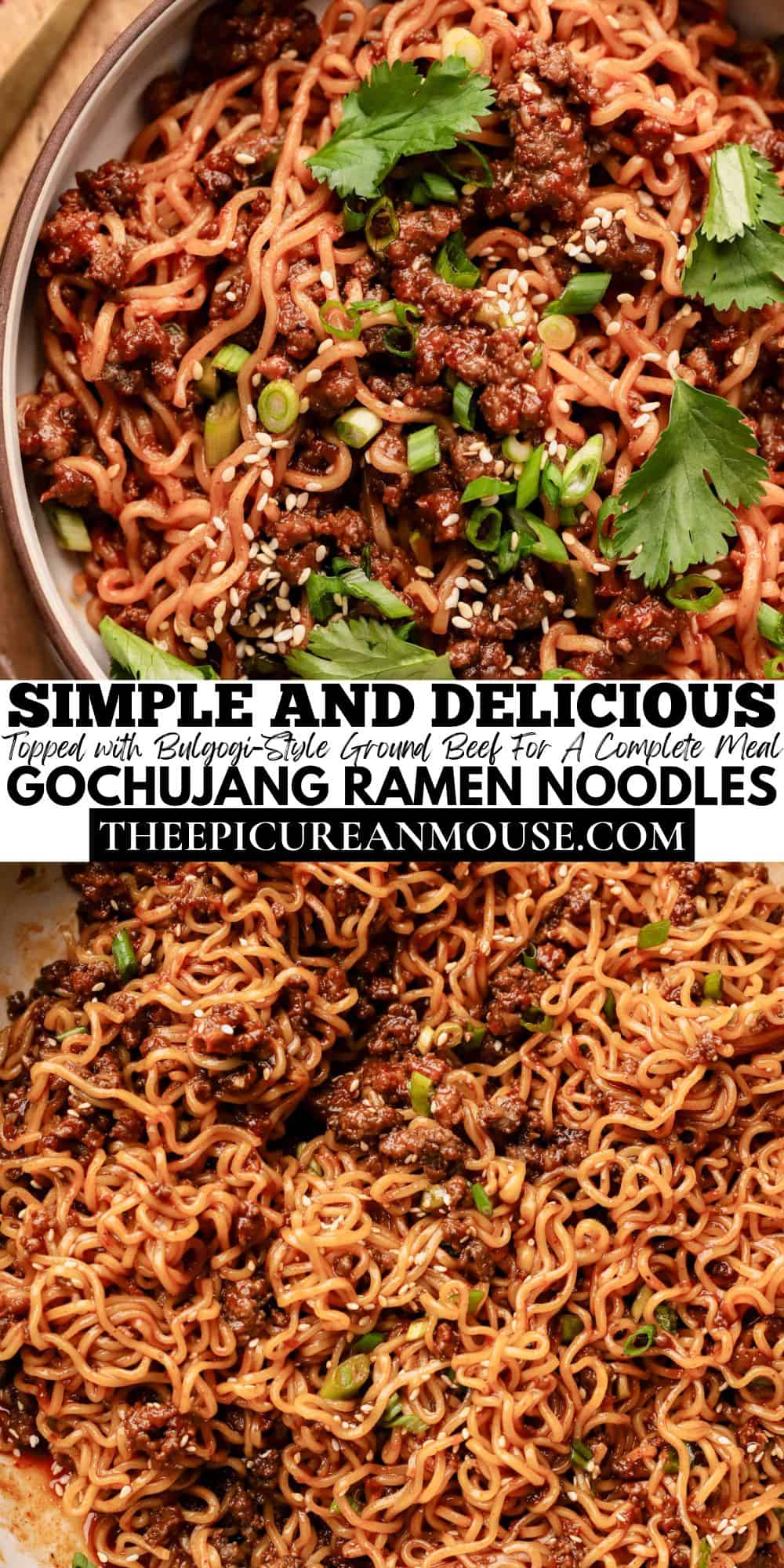
This Gochujang Ramen is made as a quick pan-style dish rather than a soup, with the noodles tossed in a simple sauce made from garlic, mirin, soy, and gochujang. The sauce is lightly sweet with just enough heat and coats the noodles without weighing them down. To make it more filling, I add a quick bulgogi-style ground beef that gets tossed right in with the noodles, then finish everything with cilantro and green onions.

This ramen recipe comes together quickly and doesn’t require much prep, making it perfect for busy weeknights. Using ground beef keeps it budget friendly, and the flavors are mild enough that it’s easy to adjust the heat for kids by simply using a little less gochujang. The beef can be cooked ahead of time, and the sauce can be mixed in advance, which makes this a great option for meal prep.
If you love quick weeknight dinners, you might also enjoy Thai Red Curry Dumpling Soup, Beef Teriyaki Rice Bowl, and Miso Butter Salmon.
Why You’ll Love These Gochujang Noodles
- Quick and easy- The noodles cook fast, the sauce comes together in minutes, and the bulgogi beef is ready in no time, making this a great weeknight dinner.
- Better than takeout- Making this at home means you can adjust the seasonings exactly how you like. The noodles stay fresh and springy instead of mushy, and the whole dish just tastes better when it’s made from scratch.
- Hearty and filling- The bulgogi beef adds an extra layer of sweet and savory flavor while also bulking up the dish with protein, making it a complete meal.
- Versatile and customizable- You can easily swap in mushrooms, Chinese broccoli, or other vegetables, and adjust the gochujang for more or less heat to suit your taste. Works great with other proteins like chicken, shrimp or tofu.

Ingredient Notes
- Oil- I use avocado oil because it as a high smoke point, but any neutral oil, such as vegetable or canola oil will work.
- Ground beef- Lean ground beef is best for this recipe, around 90% lean.
- Soy sauce- Adds salty, umami flavor for both the bulgogi and gochujang sauce. I recommend using low-sodium soy sauce to control the saltiness of the dish.
- Yellow onion- Finely grated, do not just chop, or the sauce won’t have the same depth of flavor. Use a microplane or box grated for best results.
- Red apple- Finely grated, skin on is fine. This adds natural sweetness to the sauce.
- Toasted Sesame oil- Just a small amount adds a nutty aroma and flavor.
- Sesame seeds- I use white sesame seeds and toast them briefly to bring out their flavor and add a little crunch on top.
- Garlic- Use fresh garlic cloves.
- Ginger- Fresh ginger adds some warmth and a subtle zing that pairs perfectly with the garlic and gochujang.
- Gochujang- This Korean chili paste is sweet, spicy, and savory. Adjust the amount to control the heat.
- Mirin- Mirin brings a touch of sweetness that balances the saltiness of the soy.
- Brown sugar- Balances the heat and saltiness of the sauce. Use light or dark brown sugar. You can also substitute coconut sugar.
- Ramen- Dried ramen noodles work fine in this recipe. Just make sure to cook them slightly under al dente so they don’t get mushy when tossed with the sauce and beef.
- Green onions- Use both the white and green portion. Add at the end to give the dish a pop of color and freshness.
- Cilantro- Optional, but adds a fresh, herbaceous flavor that helps brighten up the dish.

How To Make The Best Bulgogi
STEP 1: Make the bulgogi sauce. In a small bowl, whisk together the soy sauce, brown sugar, grated apple, grated onion, mirin, garlic, ginger, toasted sesame oil, and pepper. Set aside.


STEP 2: Cook the ground beef. Heat a large skillet over medium-high heat and add 1 tablespoon of oil. Then, add the ground beef and break it up into small pieces as it cooks until fully browned. If needed, drain off excess fat.


STEP 3: Combine the sauce. Pour the bulgogi sauce over the beef and stir to combine. Allow the mixture to simmer for about 2-3 minutes, allowing the sauce to mostly evaporate and the beef to caramelize slightly. Remove from the heat and set aside.


How To Make Gochujang Ramen
STEP 1: Make the gochujang sauce. In a small bowl, whisk together the gochujang, toasted sesame oil, soy sauce, mirin, grated garlic, and brown sugar. Set aside.
STEP 2: Cook the noodles. Prepare the ramen noodles according to the package instructions. Drain well once cooked.


STEP 3: Combine the noodles and sauce. Toss the cooked noodles with the gochujang sauce until evenly coated. Then, transfer the noodles to a large serving bowl.
STEP 4: Serve. Top the noodles with bulgogi beef. Then, finish with a sprinkle of fresh cilantro, green onions, and toasted sesame seeds.
Tips For Success
- Use a microplane- Grating the onion, garlic, apple, and ginger with a microplane creates a smooth, almost paste-like texture that melts into the sauce. This brings out more flavor and gives the beef a deeper, more developed taste than chopping would.
- Let the sauce reduce- Once the bulgogi sauce hits the skillet, give it time to simmer. You want most of the liquid to evaporate. This is what allows the beef to caramelize instead of turning saucy or watery.
- Cook the noodles just until tender- I recommend cooking the noodles 1 minute less than directed so they hold up better when tossed with the sauce.
- Adding vegetables- If you want to include vegetables, add them directly to the bulgogi toward the end of cooking. The heat from the beef will soften them slightly while keeping some crisp texture.

FAQ’s and Troubleshooting
Gochujang is a Korean chili paste made from red chili powder, fermented soybeans, rice, and salt. It has a deep, slightly sweet heat and a savory flavor that’s more complex than standard chili sauces.
This usually happens if the noodles are overcooked or sit too long in the sauce. Cooking them slightly under the package directions and tossing just before serving helps them hold up better.
You can add a soft-boiled egg, sautéed mushrooms, Chinese or regular broccoli, spinach, or shredded carrots. For extra crunch and flavor, try fried shallots or fried garlic. Pickled vegetables, like kimchi or pickled radish, add a tangy contrast that pairs perfectly the with rich bulgogi beef.
The spiciness mainly comes from the gochujang. To make it milder, use less gochujang or balance it with a little extra mirin or brown sugar. For extra heat, add a pinch of Korean chili flakes or chili oil when serving.
Yes! While ramen gives the best texture, udon or soba noodles are excellent options.
Store any leftovers in an airtight container in the refrigerator for up to 3 days. For the best texture, let the noodles cool completely at room temperature before refrigerating.

More Asian-Inspired Recipes To Try

Did You Make This Recipe
After trying out this recipe, I’d love to hear your feedback. Please consider leaving a comment below. Don’t forget to tag me on Instagram and follow me on Pinterest for more mouthwatering recipes. Your support is greatly appreciated!

Gochujang Ramen
Ingredients
Bulgogi Ground Beef
- 1 lb lean ground beef
- 1 tbsp avocado oil
- 3 cloves fresh garlic , grated using a microplane
- 2 tsp fresh ginger, grated using a microplane
- 1 tbsp yellow onion, grated using a microplane
- 1/2 small red apple, grated using a microplane
- 2 tbsp soy sauce
- 2 tsp toasted sesame oil
- 2 tsp mirin
- 1 tbsp brown sugar
- 1/4 tsp black pepper, finely ground
Gochujang Ramen
- 9 oz ramen noodles
- 2-3 tbsp gochujang, depending on heat preference
- 1 tbsp toasted sesame oil
- 3 tbsp mirin
- 2 tbsp soy sauce
- 2 tbsp brown sugar
- 2 garlic cloves, grated using a microplane
- 3 green onions, sliced thin
- white sesame seeds , toasted
- fresh cilantro, for garnish
Instructions
Bulgogi Ground Beef
- In a small bowl, whisk together the soy sauce, brown sugar, grated apple, grated onion, mirin, garlic, ginger, toasted sesame oil, and pepper. Set aside.
- Heat a large skillet over medium-high heat and add 1 tablespoon of oil. Then, add the ground beef and break it up into small pieces as it cooks until fully browned. If needed, drain off excess fat.
- Pour the bulgogi sauce over the beef and stir to combine. Allow the mixture to simmer for about 2-3 minutes, allowing the sauce to mostly evaporate and the beef to caramelize slightly. Remove from the heat and set aside.
Gochujang Ramen
- In a small bowl, whisk together the gochujang, toasted sesame oil, soy sauce, mirin, grated garlic, and brown sugar. Set aside.
- Prepare the ramen noodles according to the package instructions. Drain well once cooked.
- Toss the cooked noodles with the gochujang sauce until evenly coated. Then, transfer the noodles to a large serving bowl.
- Top the noodles with bulgogi beef. Then, finish with a sprinkle of fresh cilantro, green onions, and toasted sesame seeds.
Notes
- Use a microplane- Grating the onion, garlic, apple, and ginger with a microplane creates a smooth, almost paste-like texture that melts into the sauce. This brings out more flavor and gives the beef a deeper, more developed taste than chopping would.
- Let the sauce reduce- Once the bulgogi sauce hits the skillet, give it time to simmer. You want most of the liquid to evaporate. This is what allows the beef to caramelize instead of turning saucy or watery.
- Cook the noodles just until tender- I recommend cooking the noodles 1 minute less than directed so they hold up better when tossed with the sauce.
- Adding vegetables- If you want to include vegetables, add them directly to the bulgogi toward the end of cooking. The heat from the beef will soften them slightly while keeping some crisp texture.